

Mensaje de error
- Notice: Array to string conversion en drupal_attributes() (línea 2516 de includes/common.inc).
- Notice: Array to string conversion en drupal_attributes() (línea 2516 de includes/common.inc).
Our installations
EUSS is located in an old building in some of its parts, completely renovated in 2002 to house the engineering studies. Our hallmark: we have more laboratories than classrooms.
- Inicio
- The Institution
- Our installations
Share
Our installations
Our facilities are undoubtedly one of our strong points.
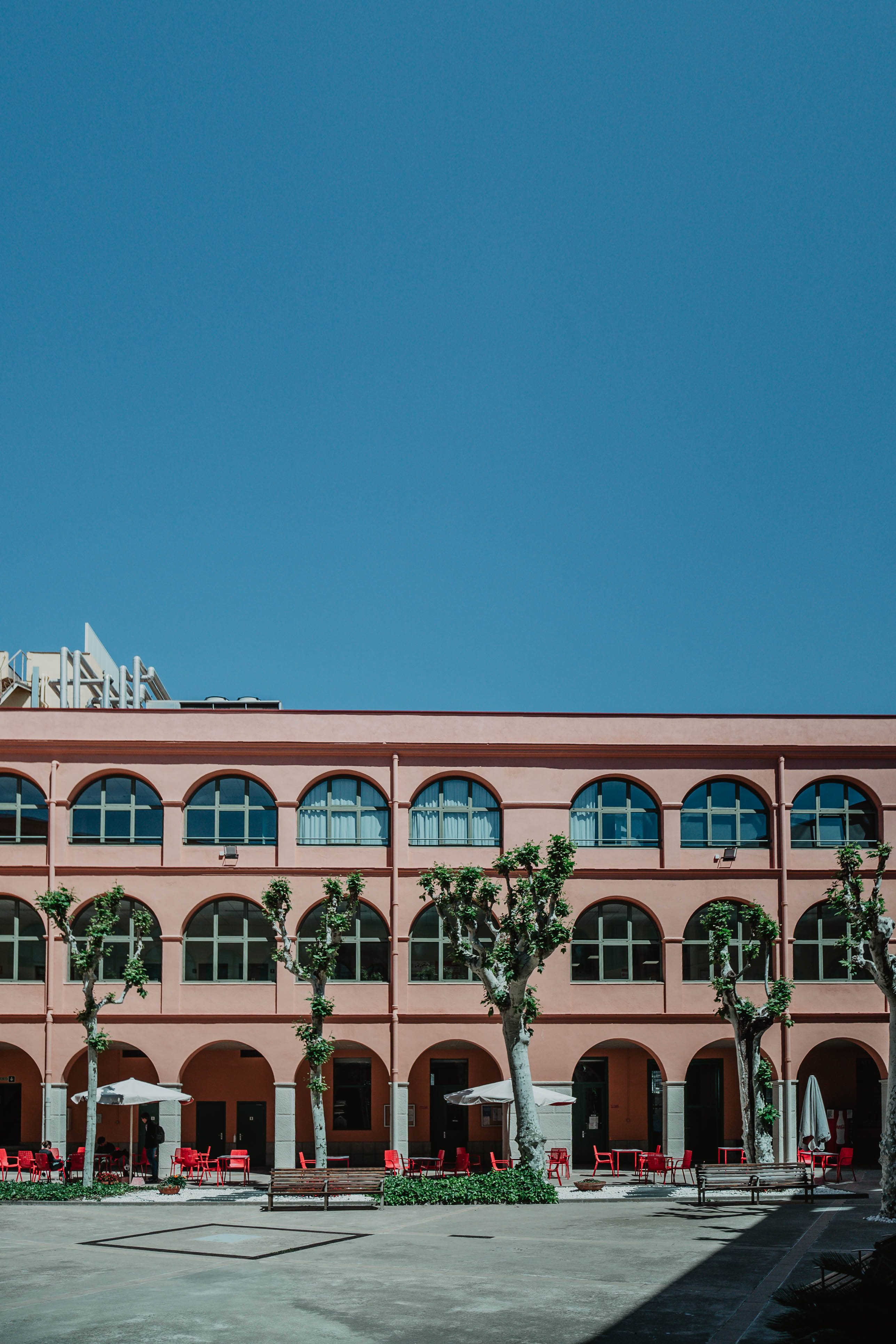
The building in which we are located is centenary in some of its parts, but the remodeling carried out during the 2001-2002 academic year has transformed it into a modern building, equipped with air conditioning, voice and data networks, and ample space for laboratories, classrooms and offices for both teaching staff and administration and services.
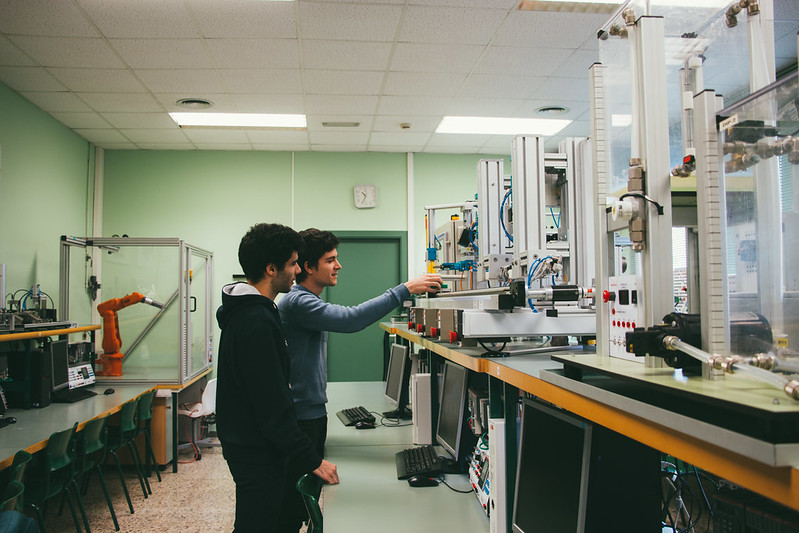
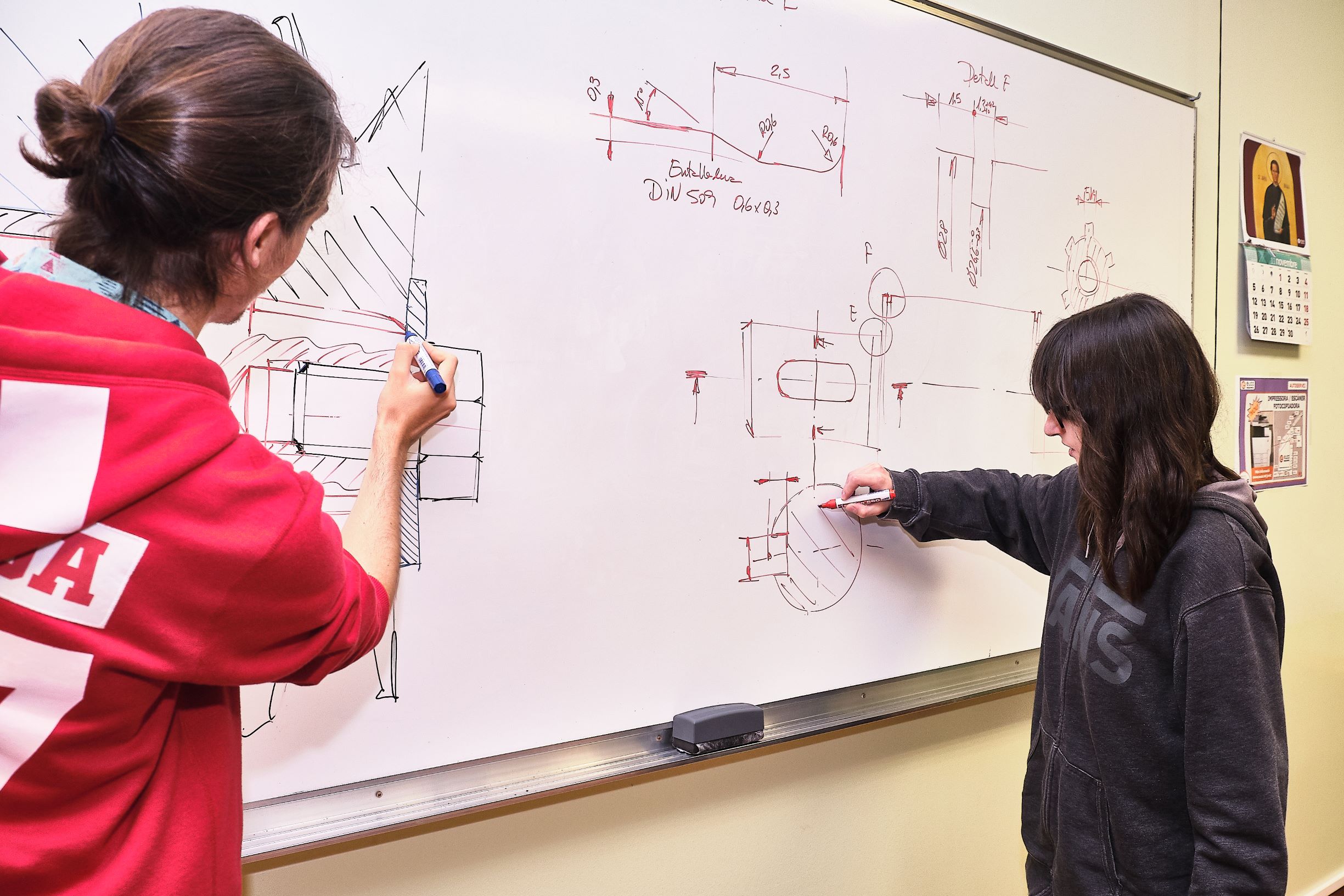
We have 11 laboratories for teaching, for the development of final projects and research, 7 classrooms and 2 specific spaces for meetings and courses for companies. In addition to the usual services of Publications, Library, study rooms, Orientation and Professional Insertion Service, Academic Management, etc.
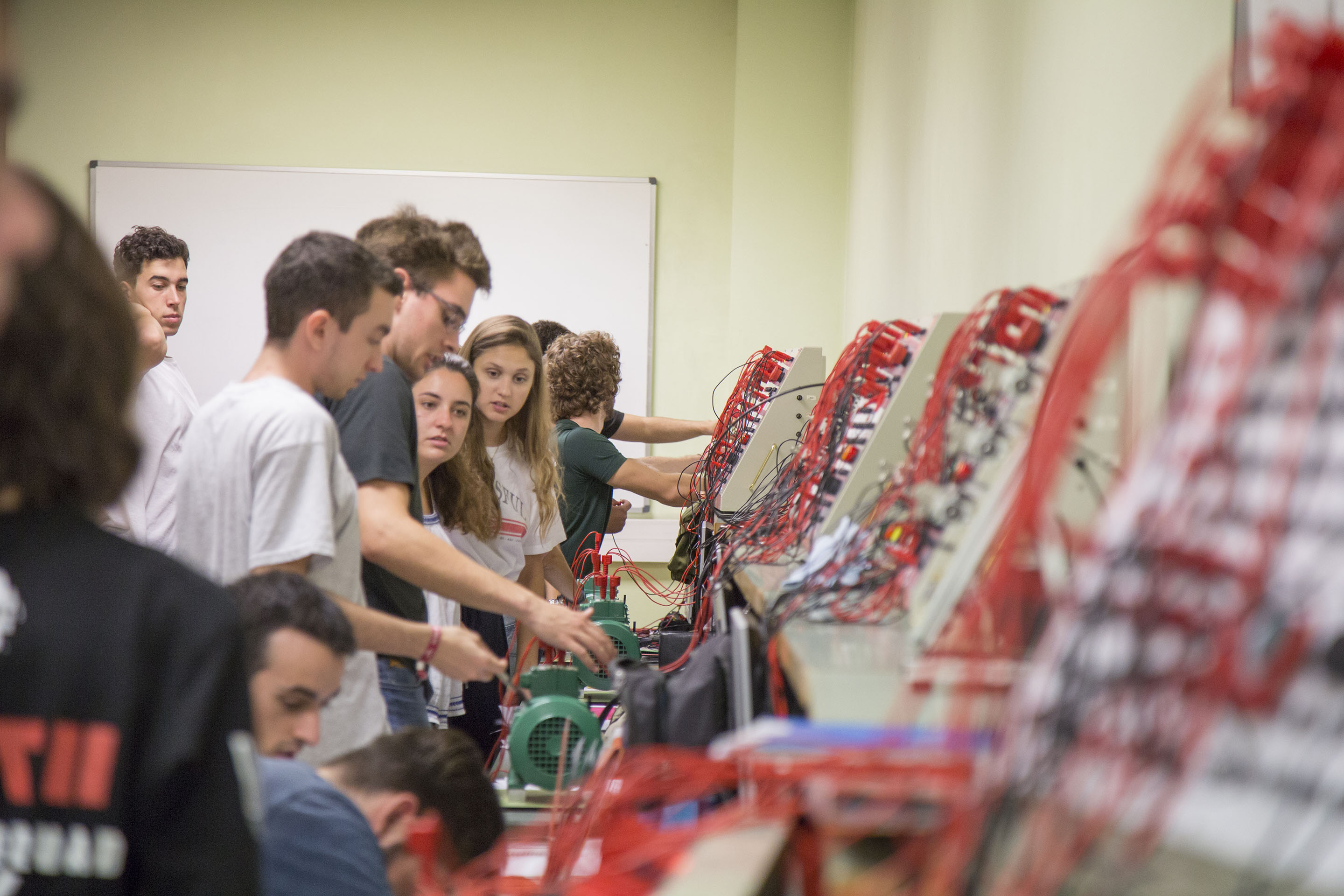
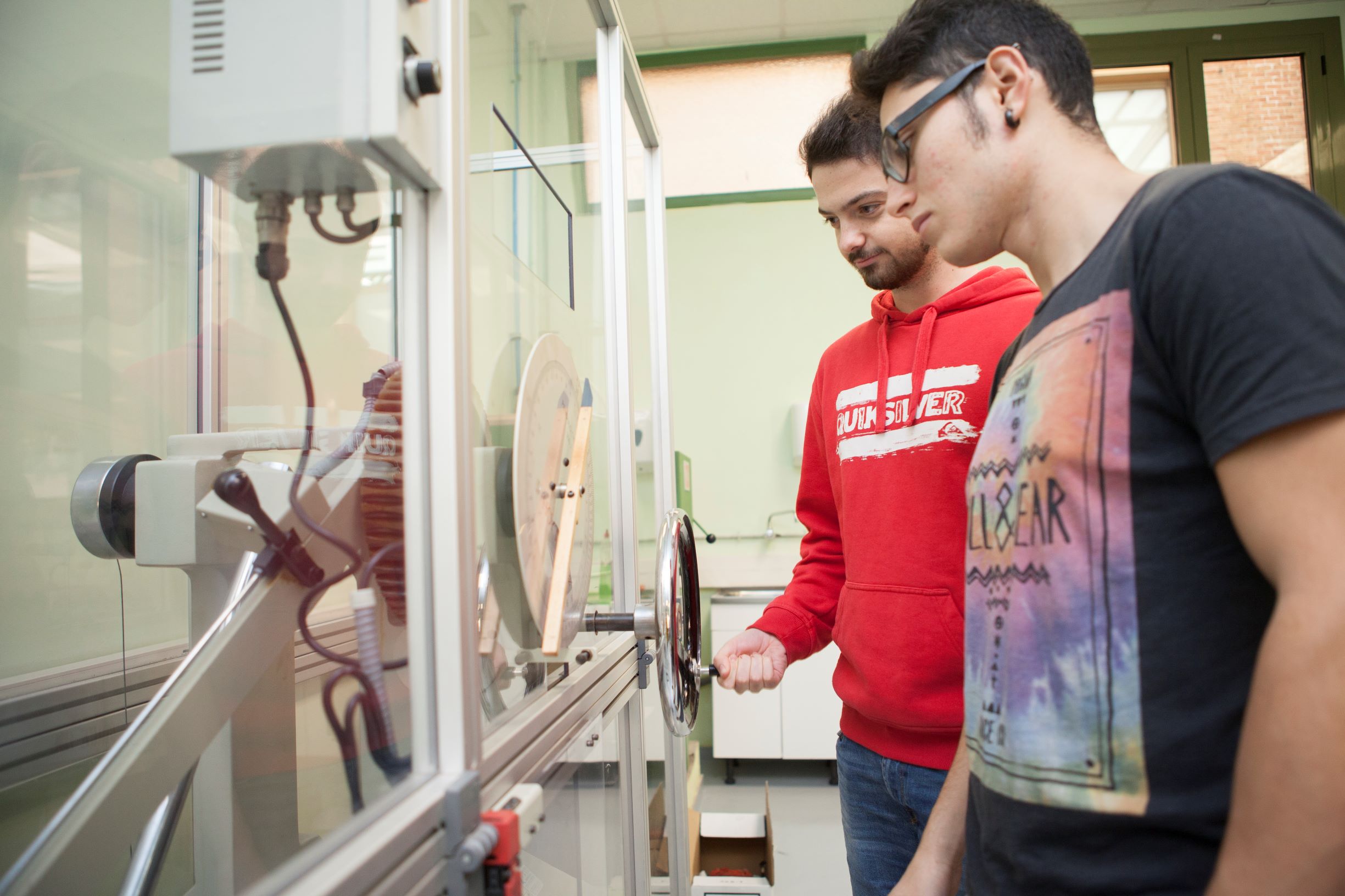
The laboratories, as you can see by visiting them personally, are equipped with the best technical equipment necessary for the subjects taught. Work placements are carried out either individually or in groups of two students.
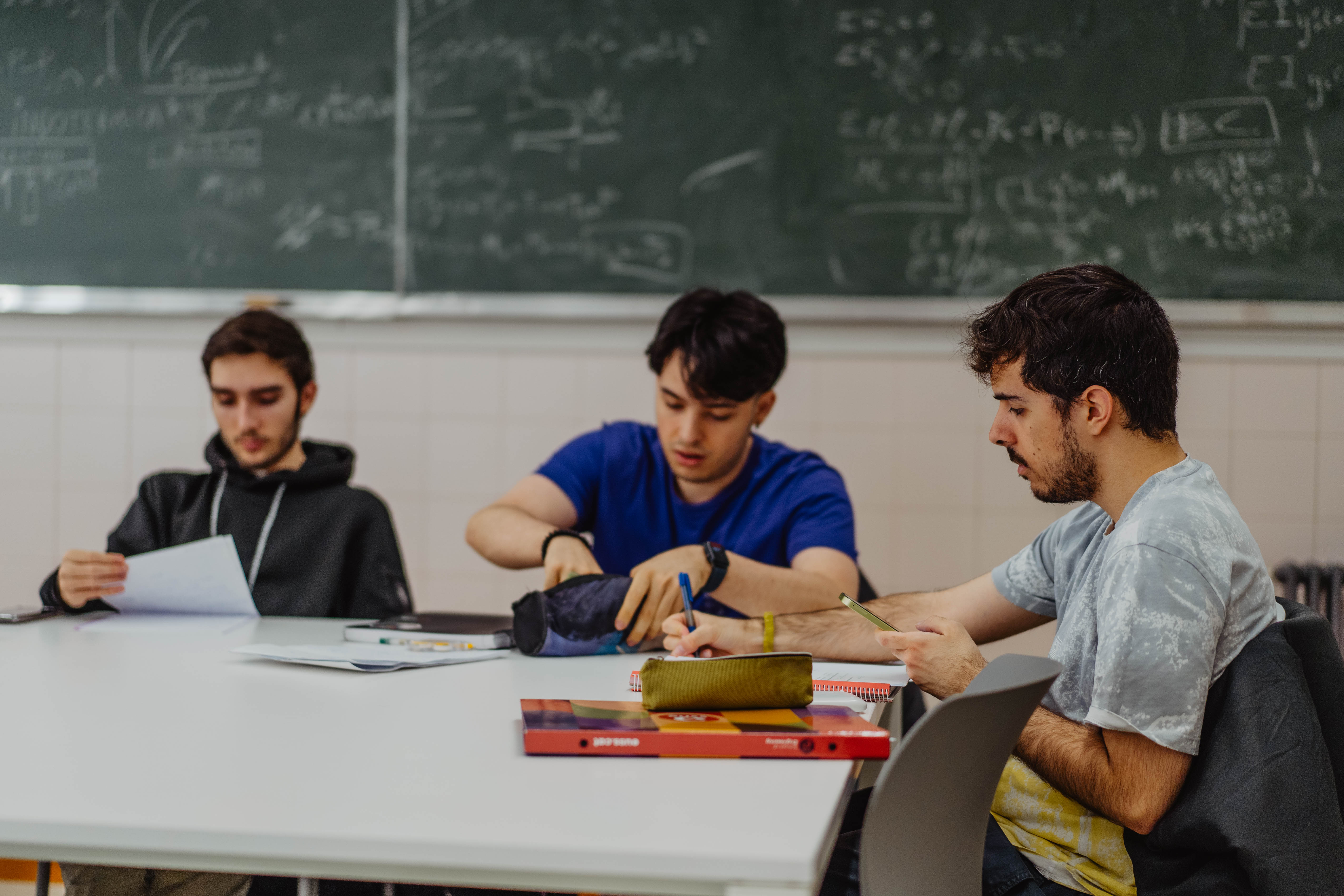
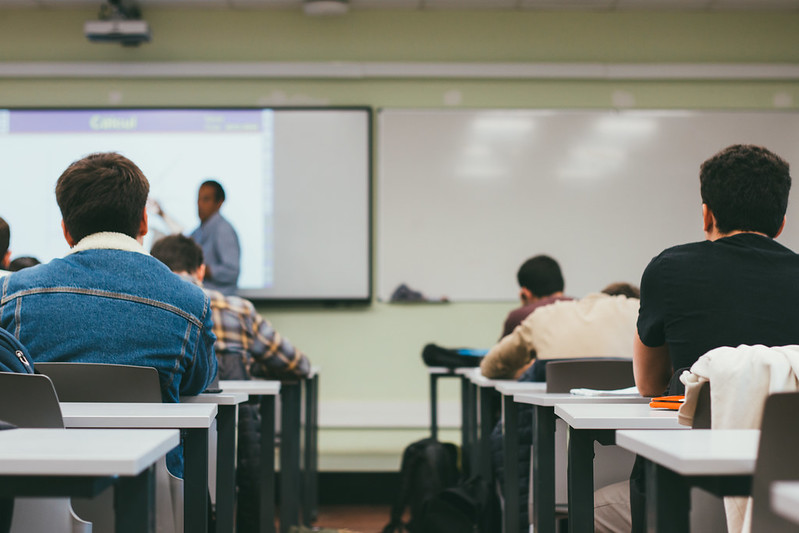
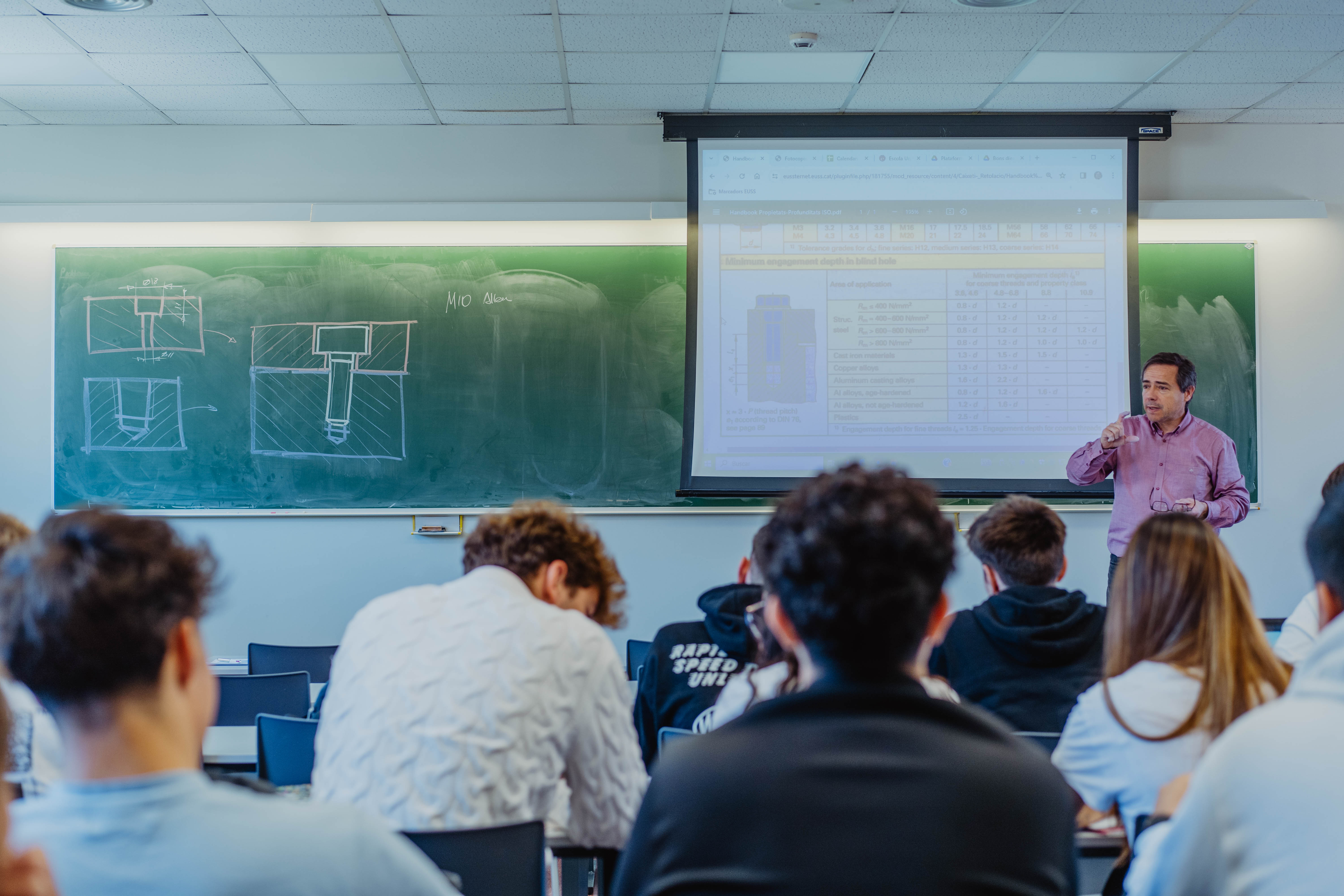
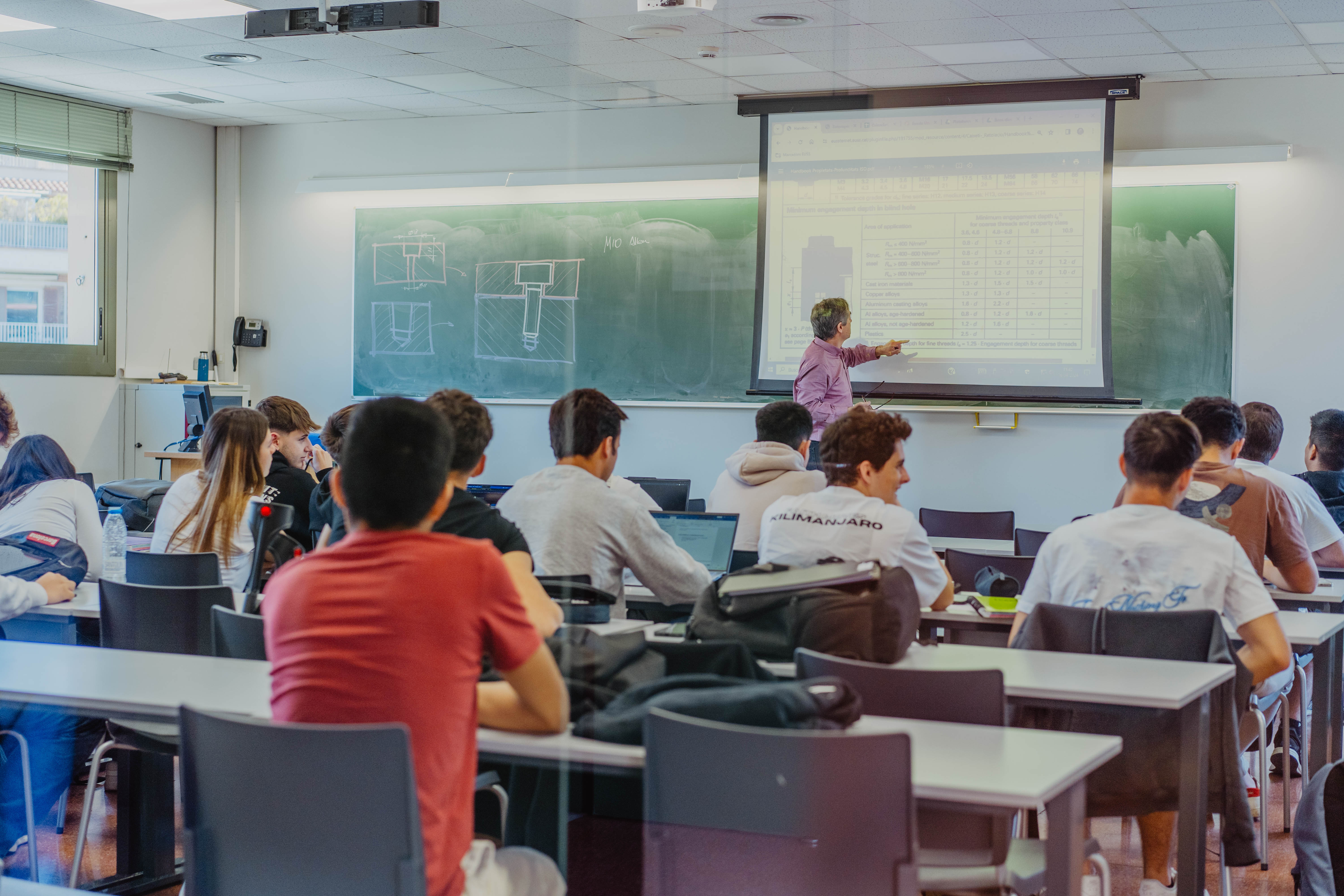
The classrooms are equipped with the necessary multimedia elements so that the teaching staff can teach in the way they consider most appropriate.
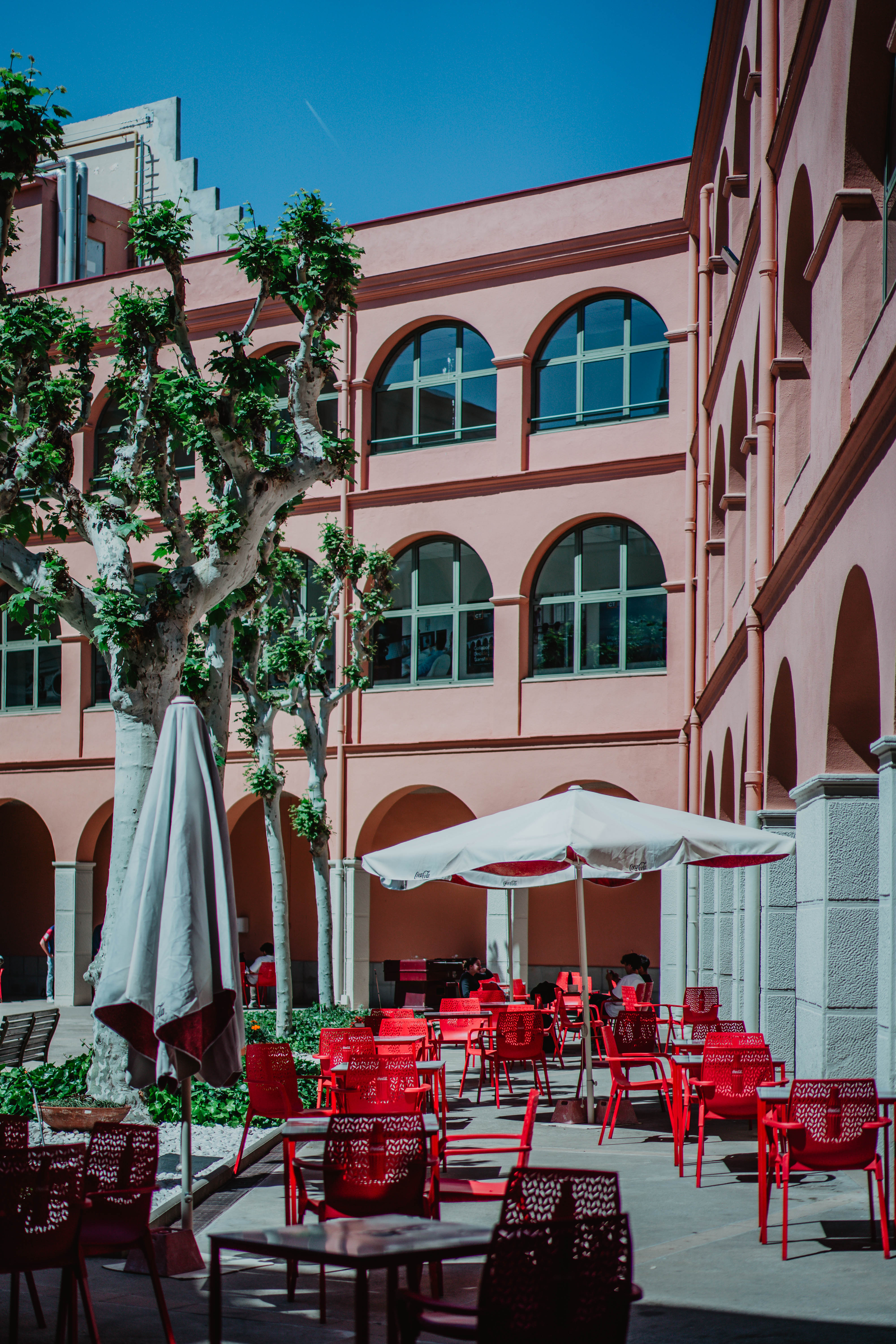
All this, around an arcaded courtyard symbolizing the balance between humanism and technique that the EUSS wants to transmit to its future engineers and future engineers.
From here, you can take a virtual tour of the EUSS to see our laboratories.
You can also consult the plans of our building as well as the basic rules of the evacuation plan of the building.
Industrial Electronics Laboratory

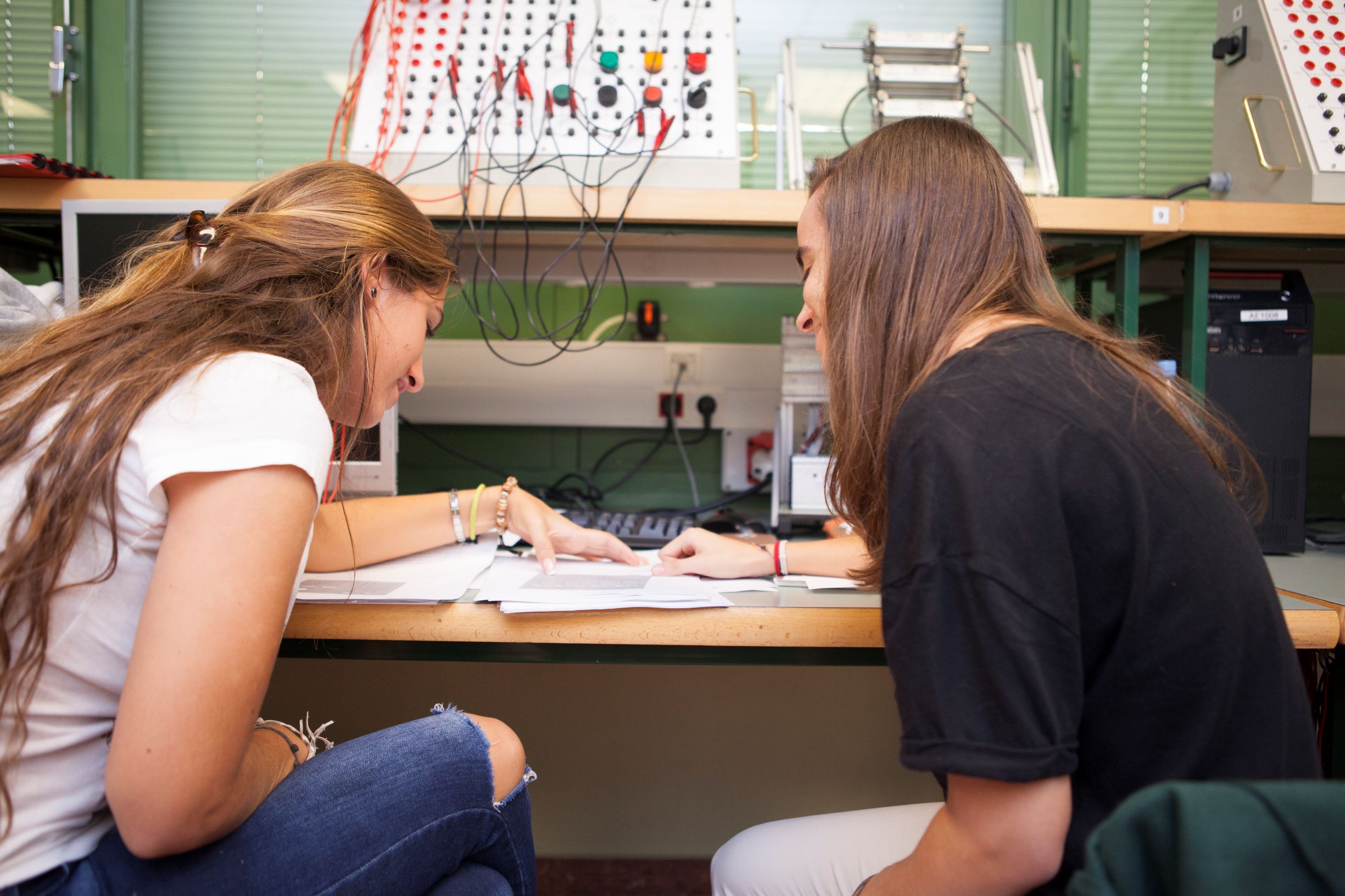
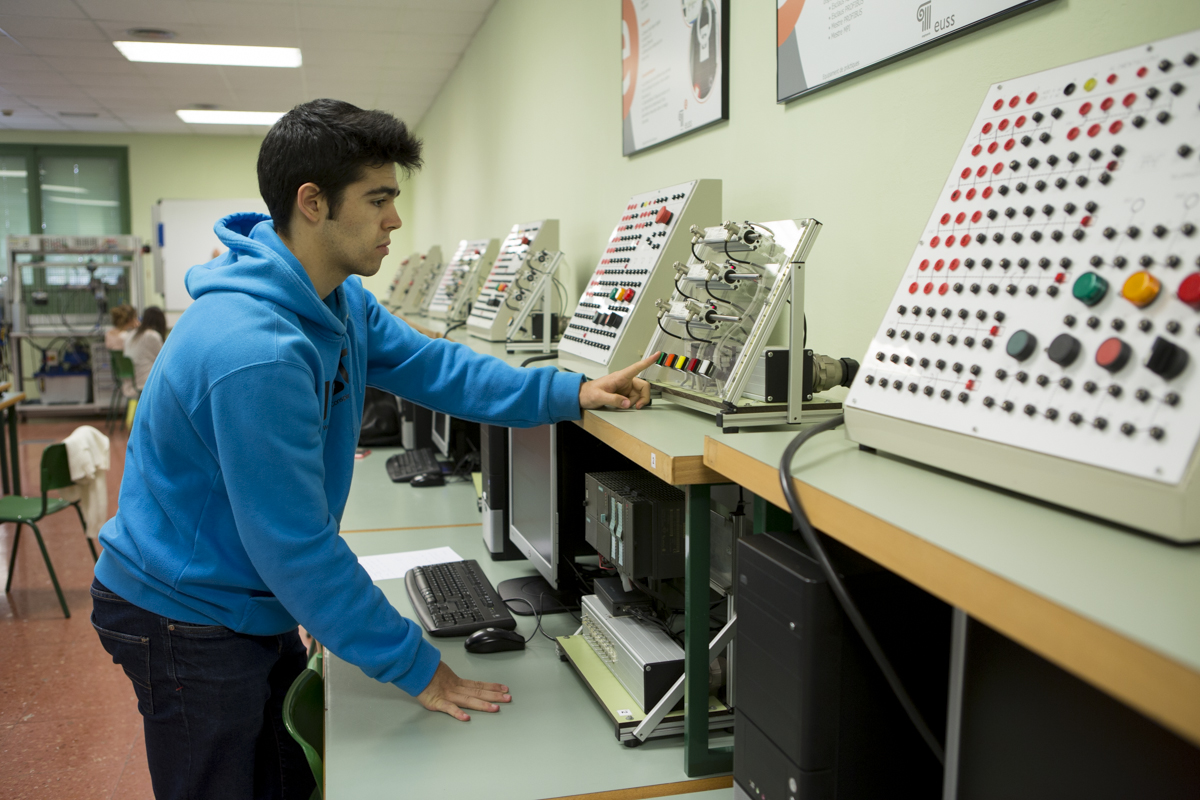
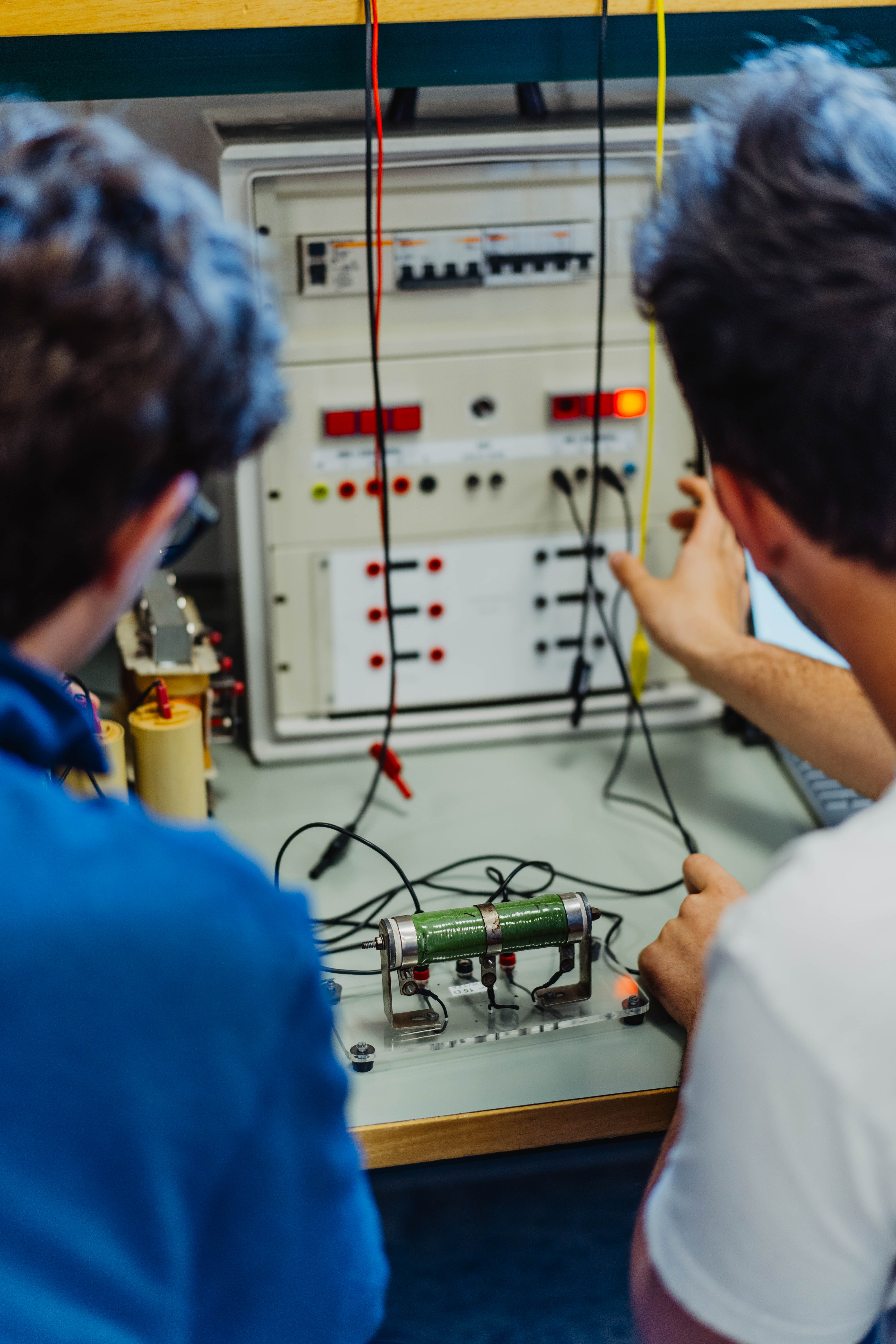
The Industrial Electronics Laboratory has 15 fully equipped workstations for two people where electronics practices and projects are carried out. Programs are available for the development of programmable digital circuits and printed circuit boards, as well as analog or digital simulations.
Specific equipment and tools are also available for the development of "learning by doing" engineering projects.
Subjects:
- Industrial Automation and Control Methods
- Environmental Engineering
- Digital Electronics and Microprocessors
- Electronic Technology
- Electronic Engineering Project I
- Industrial Internet of Things
- Technical Office and Project Management
- Wind Energy and Biomass
- Industrial Computing and Communications
- Electronic Instrumentation
- Electronic Engineering Project II
- Signal Processing and Data Analysis
- Business
Equipment for each of the 15 workstations:
- 1 Function generator: GF 232
- 1 Power supply: FAC 662B
- 1 Differential voltage probe P5200
- 1 Current probe A622 or HZ56
- 1 PC computer with Intel i7-4790 processor, 8GB RAM, and 1TB HDD
Shared equipment:
- 6 Altera-terasic DE1 logic trainers
- 3 LCR meters: MZ 505
- 1 Beeprog 2 universal programmer
- 4 Hameg HMO724 4-channel oscilloscopes
- 2 R&S HM724 4-channel oscilloscopes
- 6 Hameg HMO1002 2-channel oscilloscopes
- 4 R&S RTC1002 2-channel oscilloscopes
- 2 HO3516 logic probes
- 4 HO3508 logic probes
- 5 DC and AC motor control models
- 1 Educational telecommunications LAN network, with 32 outlets
- 1 Wireless network for IoT
- 20 Raspberry Pi
- 1 Tektronix PS2520G programmable power supply
- 1 HP E3631A programmable power supply
- 2 HP 34401A programmable multimeters
- 2 HP 33120A programmable function generators
- 1 HP 53131A programmable universal counter
- 1 HP 4263B programmable LCR meter
An attached workshop (office) equipped with:
- A JBC soldering station
- An LPKF ProtoMat PCB machine
- Drill, drill bits, and tools for machining boards
A solar photovoltaic installation equipped with:
- Circutor solar inverter
- Lead-acid batteries
- BK Precision PVS10005 1000V/5A programmable power supply
- 5 Solar Explorer Kits (Texas Instruments)
- 3 VACON inverters
Software:
Programs (Windows environment)
- Quartus II (Altera)
- Mozilla Firefox
- Cadence
- LabVIEW
- DIALux
- Disano
- dmELECT
- MATLAB
- Arduino
- ARMStudio
- VNC
- Audacity
- EasyEDA
- KiCad
- Eagle
- Project
Programs (Linux environment)
- Geany
- GCC
- Doxygen
- Mozilla
- SQLite 3
- Firefox
- SVN
Industrial Computing Laboratory
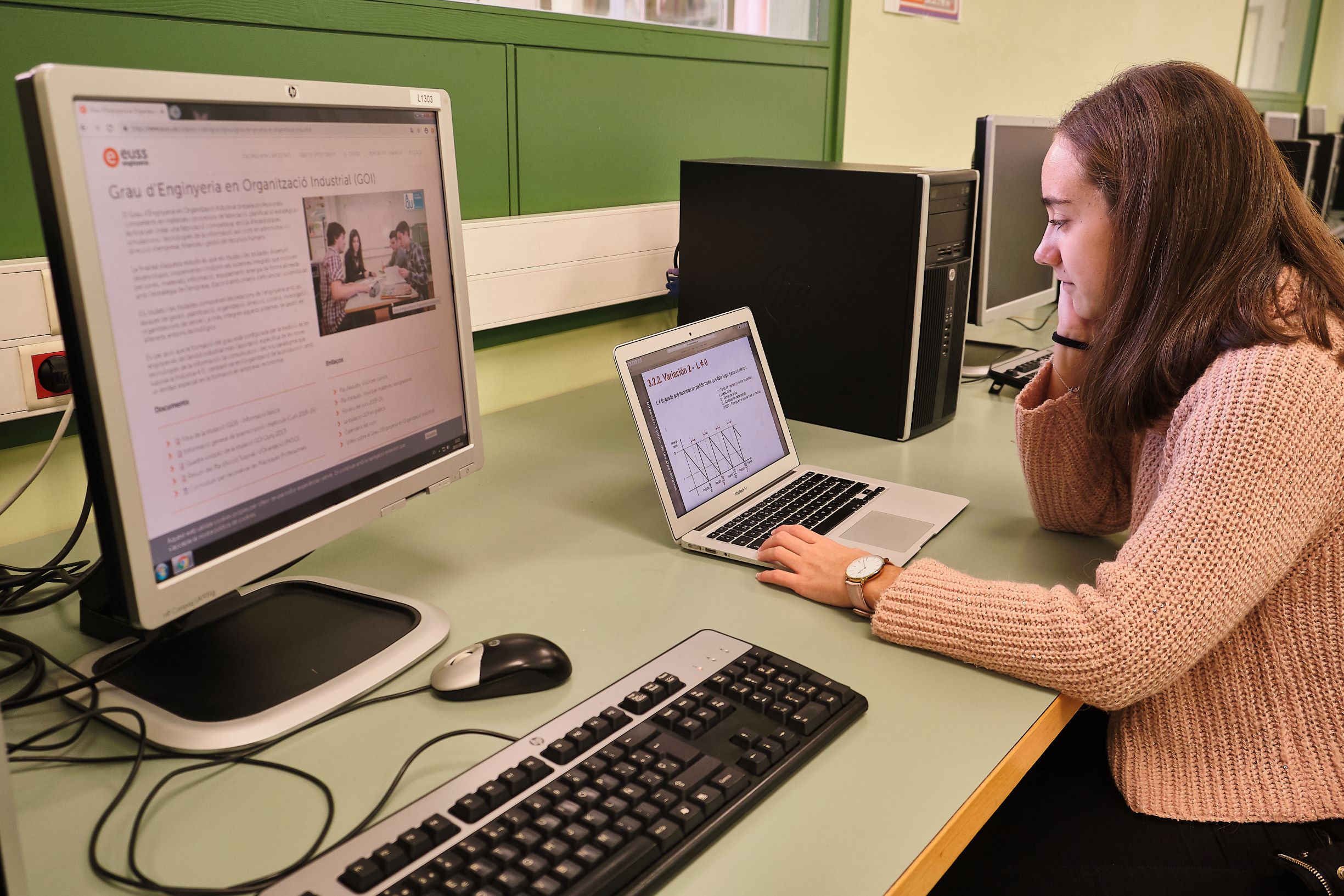
The Industrial Computing Laboratory is dedicated to the study of microprocessor-based systems in embedded applications. Firstly, microcontroller-based systems are dealt with using a didactic model specifically developed for this purpose and, secondly, higher performance systems that incorporate an operating system, in our case Linux, are studied.
In this laboratory, the first-year student learns to write programs in high-level languages. Specifically, Pascal, C/C++ and Visual Basic.
Free access is also left free for a few hours a week so that the student can surf the internet to look for information related to the degree, check their email, etc.
Subjects:- Informática
- Métodos Cuantitativos para la Gestión
- Estadística
- Ingeniería de Producto y de Proceso
- Dirección de Proyectos
- Tecnologías de la Información y las Comunicaciones
- Sistemas de información para la dirección
- Investigación de Operaciones
- Ingeniería Eólica y Biomasa
- Generación Distribuida
- Control Estadístico del Producto y del Proceso
- 17 computers with the following configuration:
- Intel Core i5 8500 3.0 2666MHz 6C 65W CPU
- Memory 16GB
- 19" monitor
- Disk 512GB. SSD
- Projector
- Videomeeting system
|
Windows 11 64bits LibreOffice Browsers Thonny Phyton Working model 2D VM Virtual Box Office 365 SQL server express |
Freemind yEd CYPE dmELECT Matlab MDSolids Solid Works Autocad MySQL |
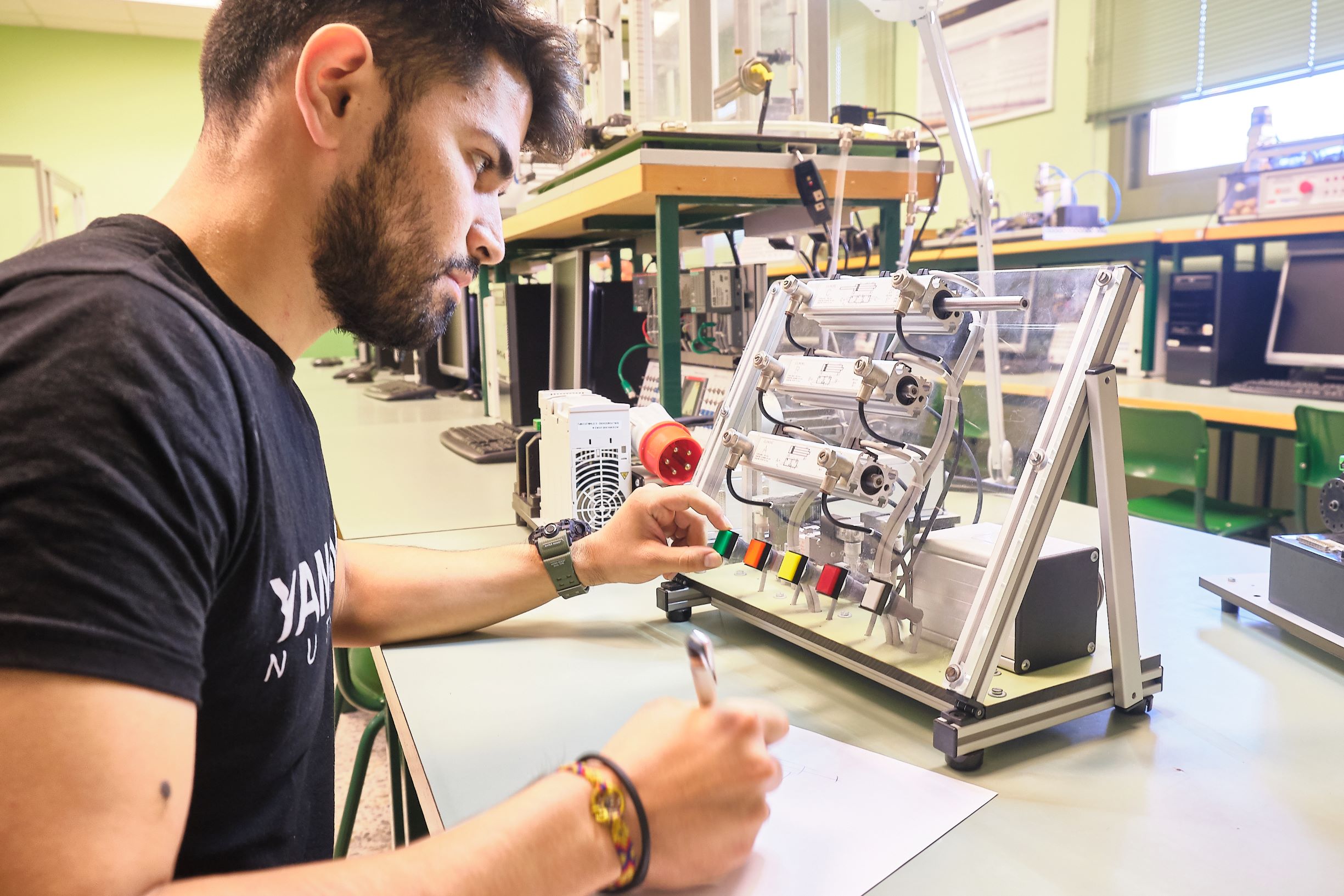
Industrial Automation Laboratory
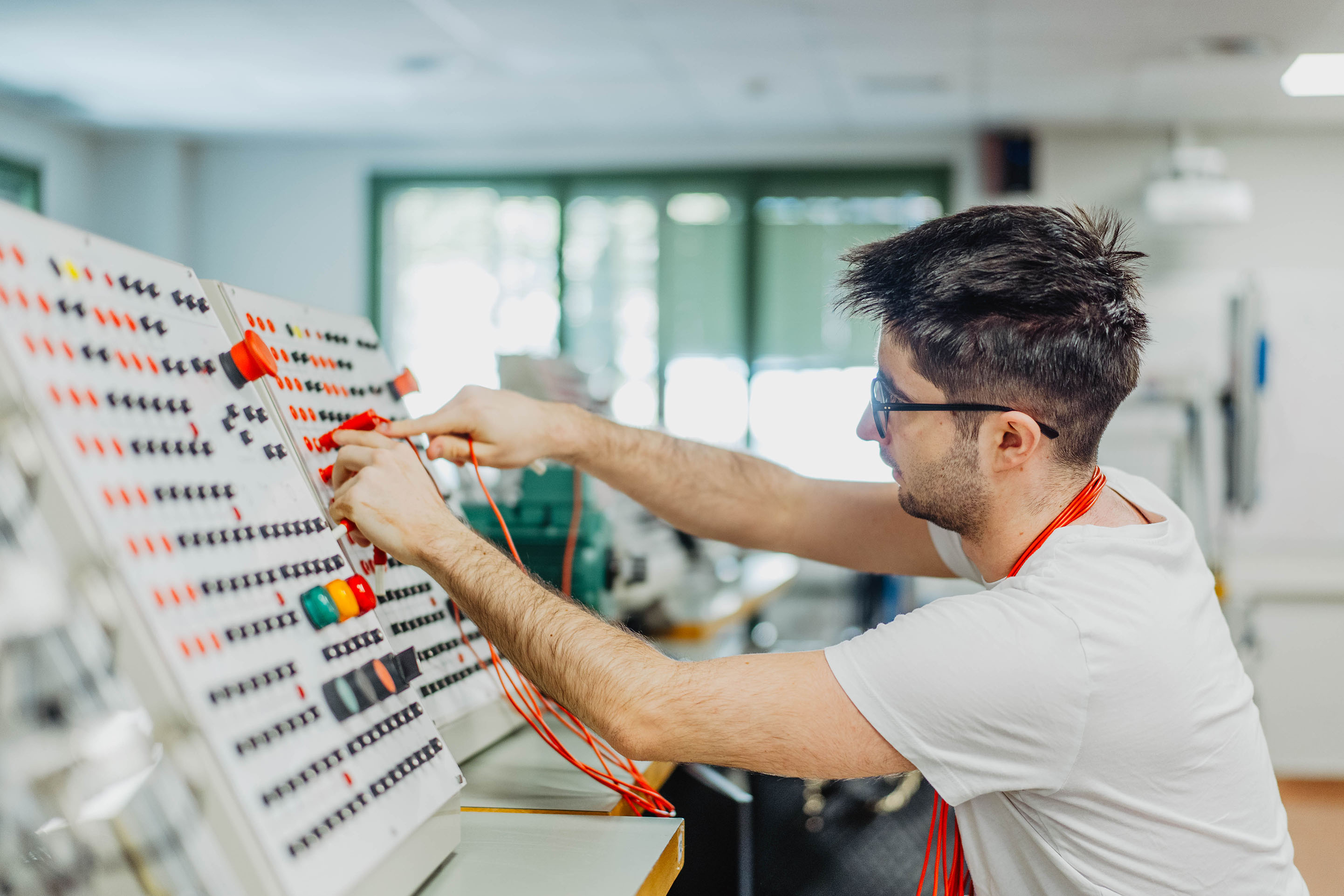 Subjects:
- Industrial automation and control methods
- 1 Dual Core computer
- Windows 10 10/64 bit
- 1 PLC trainer with the following configuration: Power supply 230V AC/24VDC, CPU S7-1200 1214C. TIA PORTAL V14 SP1
- 1 electro-pneumatic trainer panel.
- 1 electrical trainer panel
- 1 connection hose
- 1 Rexroth hydraulic circuit trainer
Automation and Robotics Laboratory
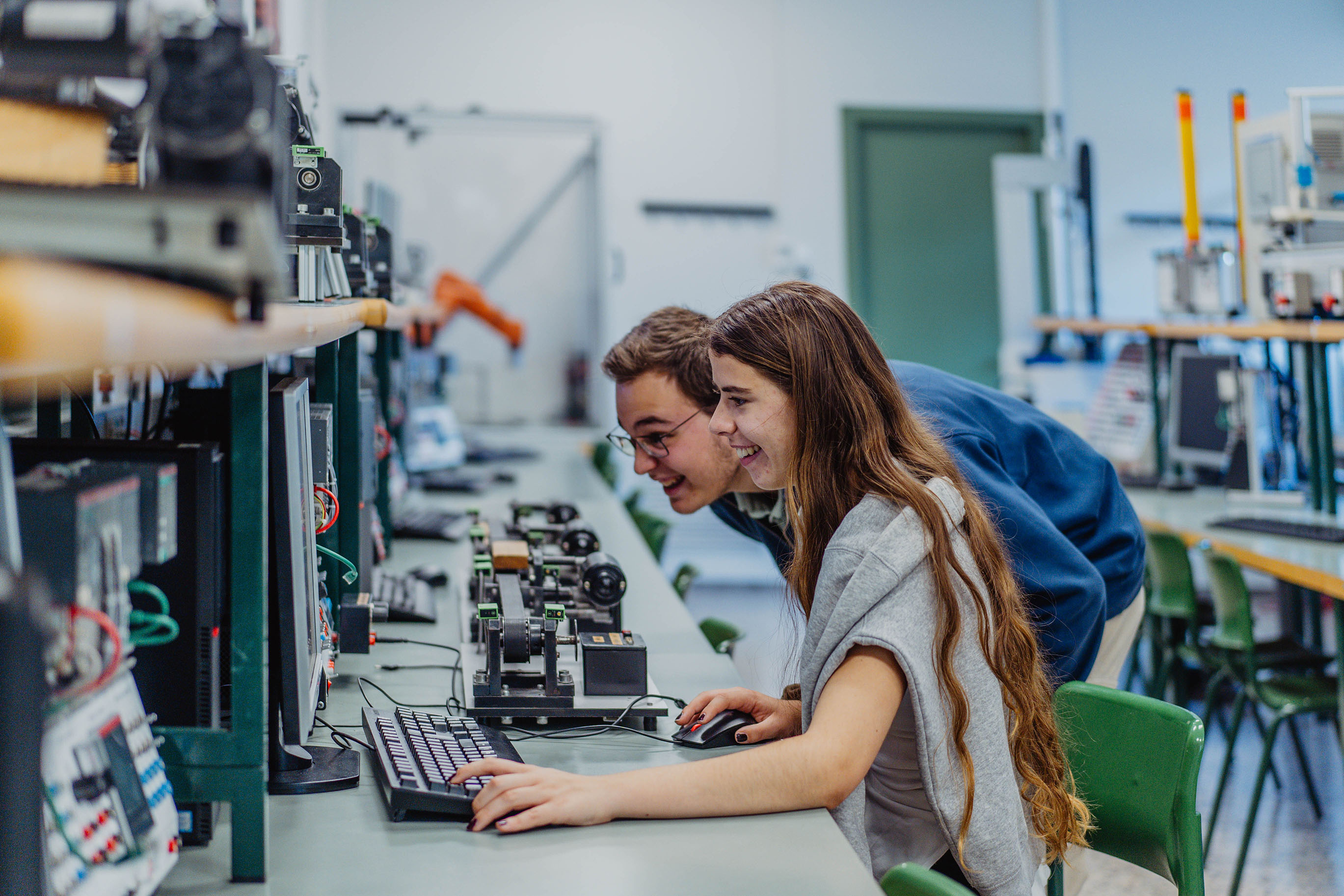
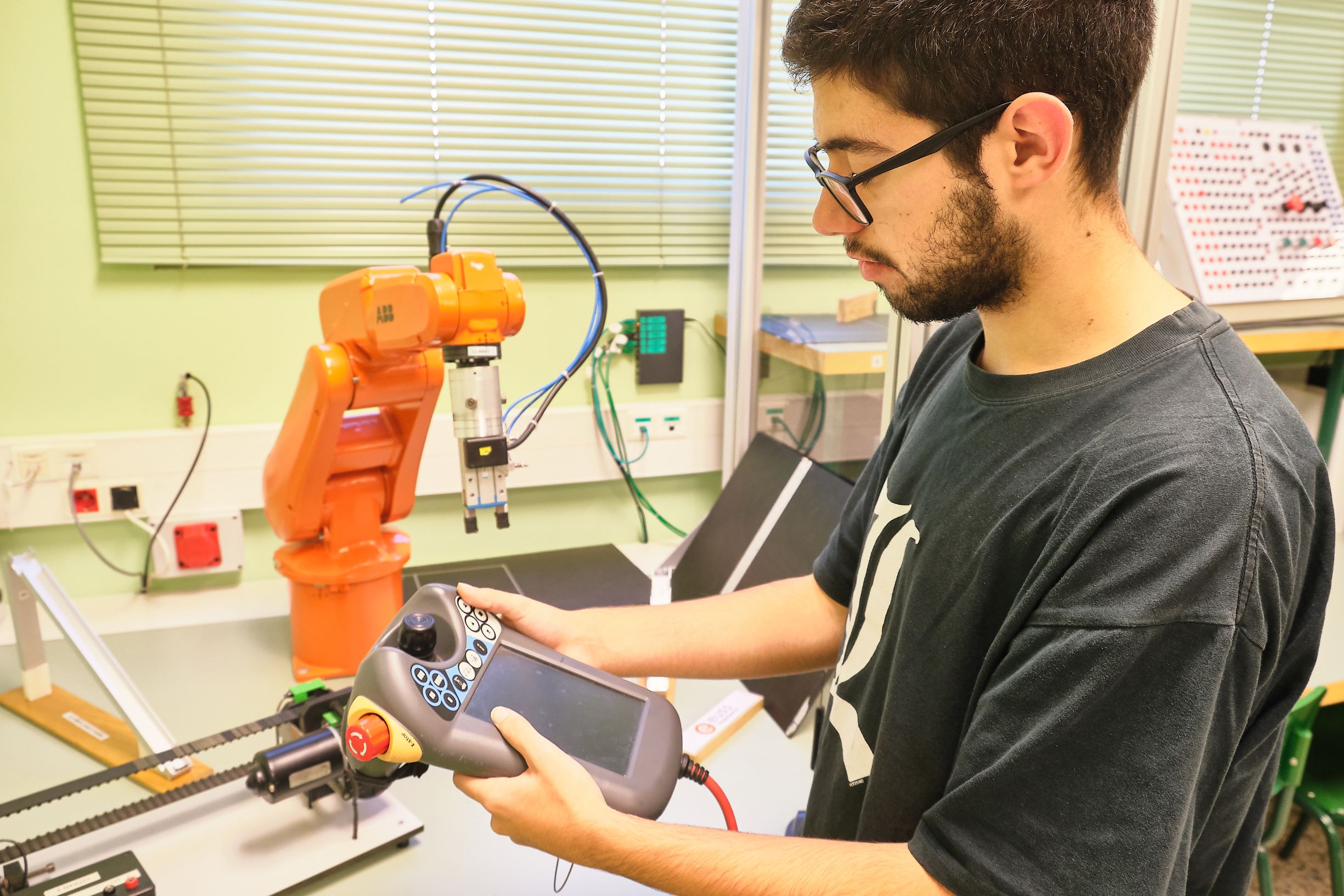
This laboratory is dedicated to advanced automation and industrial robotics training. It features 15 workstations where students carry out practical exercises that bring them closer to the industrial world of automation and robotics. The topics covered in the laboratory include PLC programming, industrial communications (Ethernet, Profinet, EtherCAT), Supervisory Control and Data Acquisition (SCADA) systems, machine vision, motion control, and robot control and programming. The training rigs used in the laboratory are reproductions of real industrial processes and have been designed and built by the school's faculty and students. The laboratory also provides training in the field of building automation (domotics), both for residential and industrial applications, as well as in the control of low-, medium-, and high-voltage electrical power lines.
Courses:
- Industrial Communications
- Robotic Systems
- Industrial Process Automation
- Industrial Automation
- Internet of Things in Energy Systems
- Smart Buildings
- Advanced Robotics
Equipment at Each of the 15 Workstations:
- Computer with Intel i7 processor
- Siemens PLC training unit with S7-1500 CPU, digital and analog inputs/outputs, decentralized Profinet ET200 I/O modules, and ABB HMI display
- Digital signal simulator
- Analog signal simulator
- CITRAN conveyor belt simulator training rig
- Pneumatic cylinder training rig
Shared Equipment:
- 3 ABB IRB120 industrial robots with six degrees of freedom
- 11 ABB ACS355 variable speed drives with Profinet communication
- 4 machine vision cameras (Genie Nano and Boa Pro)
- 3 electrical automation training panels
- 2 Pilz PNOZ Multi MB0 safety PLCs
- Safety devices including relays, photoelectric barriers, interlocks, and two-hand control units
- Sensors based on different technologies: inductive, capacitive, ultrasonic, and optical
- Water tank process training rig
- Festo pneumatic training system with 3 stations
- Freight elevator training rig
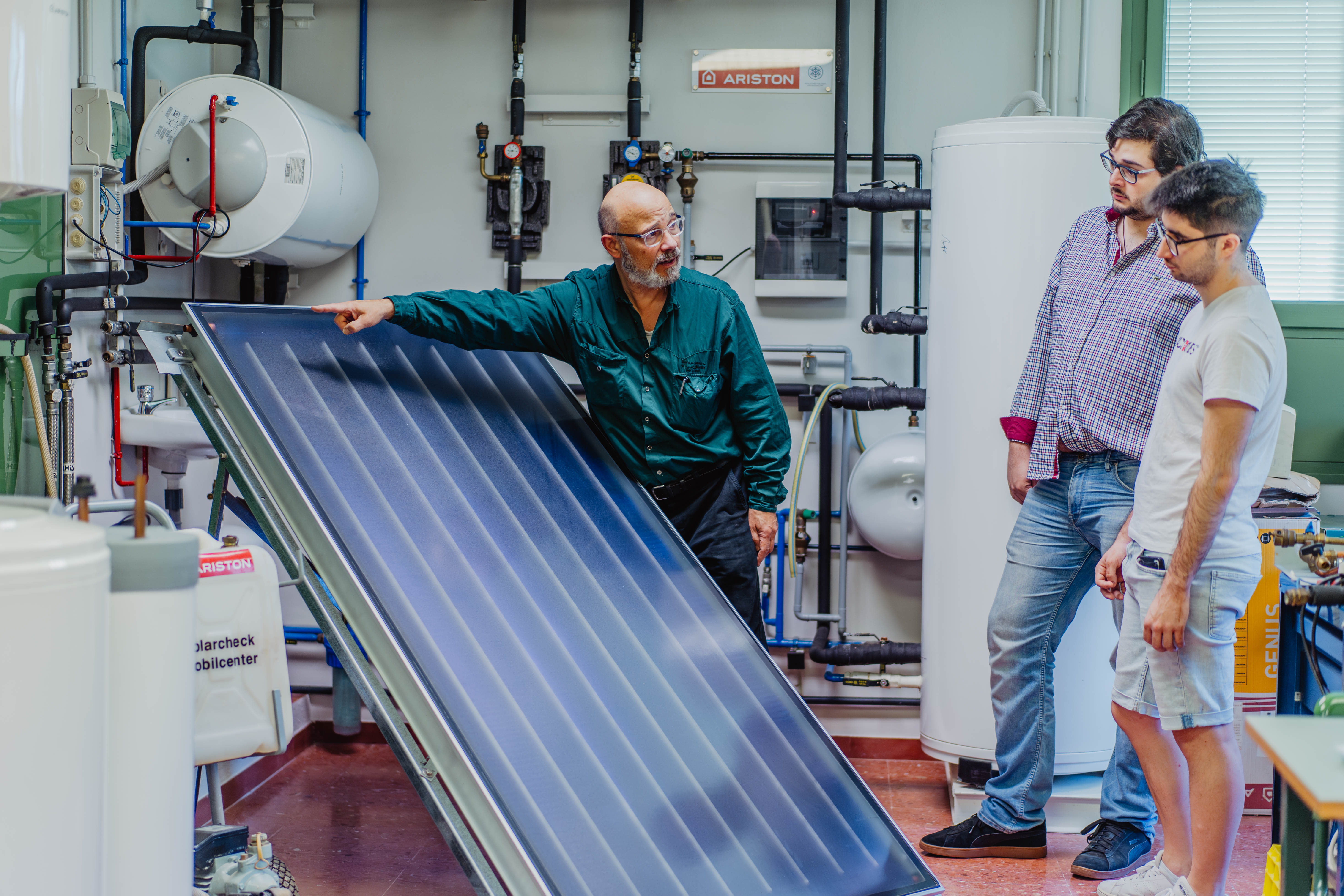
Renewable Thermal Energy Laboratory
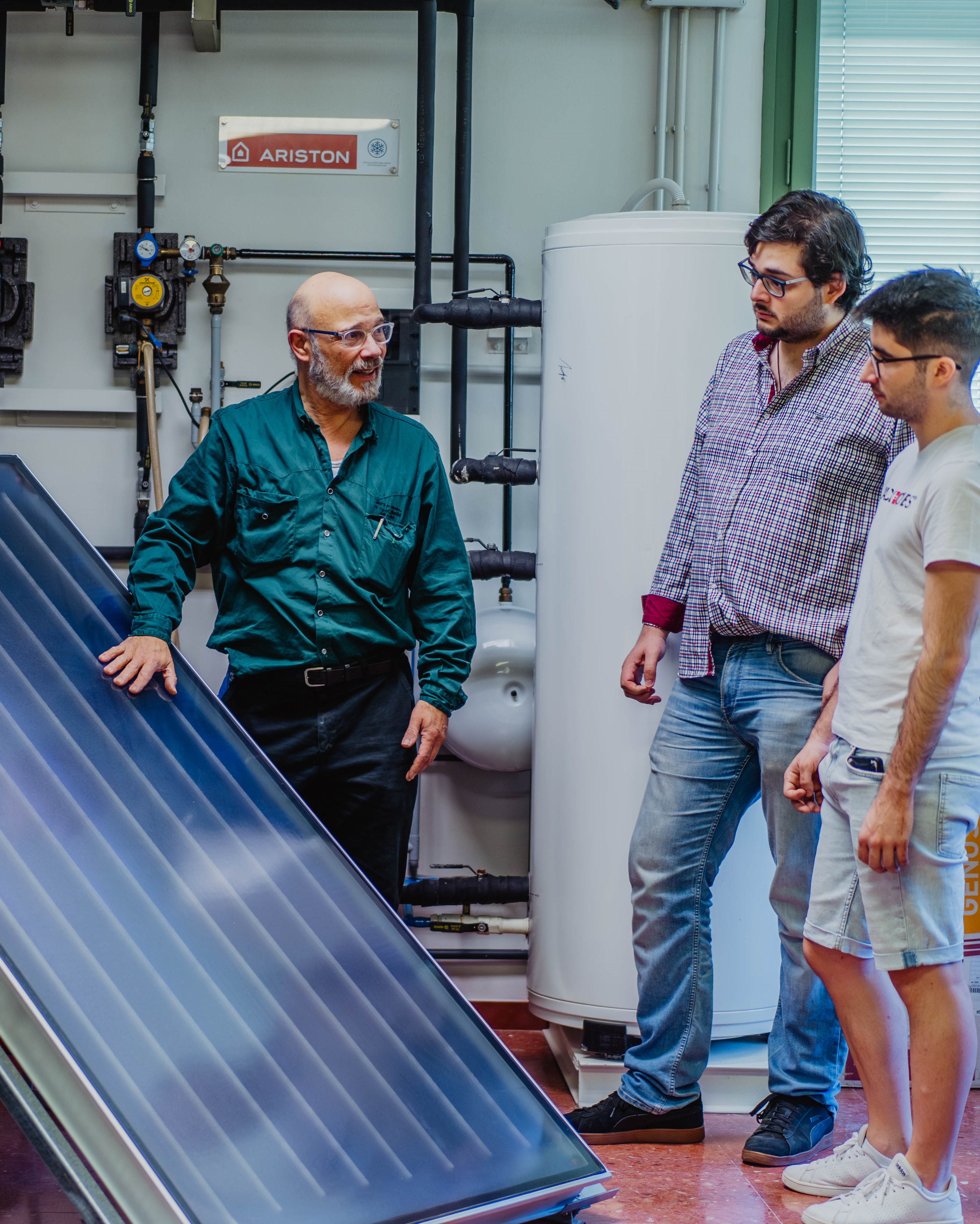
Laboratory for training technicians and operators in solar thermal installations for domestic water. The laboratory has a capacity for 15 people, is equipped with a projector and computer and can emulate the following topologies:
Centralised installation with electrical support.
Centralised installation with three types of inter-accumulators: coil, double jacket and plate heat exchanger.
Distributed installation.
General purpose equipment:- TOP 2.5 collector
- Collector inlet and outlet elbow
- TOP 2.5 flat roof collector fixing.
- Interaccumulator BS1S 150 litres with 1 coil
- Forced circulation group - mod. IDA
- Forced circulation unit - mod. BASE 15x40
- Safety valve R1/2" 6 bar
- Control unit ELIOS 25
- Expansion vessel 18 litres
- 5-litre antifreeze canister.
Thermoelectric TU GLASS 50 litres and a thermostatic/thermostatic-mixing valve.
Equipment for 3 workstations:- ARB 80-litre double-jacketed interaccumulator.
- Forced circulation unit-mode. IDA
- Forced circulation group-mode. BASE 15x40
- Safety valve R1/2" 6 bar
- Control unit ELIOS 25
- Expansion vessel 18 litres.
- 6 High efficiency LED solar lighting kit SOLARLIFE-XUNZEL-5i
- 2 Solar Photovoltaic Panel SOLARPOWER-XUNZEL-15W high efficiency with 2m cable
- 1 XJ-XUNZEL-400W-12V Advanced Pure Synodal Wave Inverter including wiring
- 1 cabinet with small material for practical exercises
- Hydraulic model
- Water hammer pump model
- 1 computer for taking and processing experimental data
- Installation of a water supply and drainage system to operate the hydraulic model.
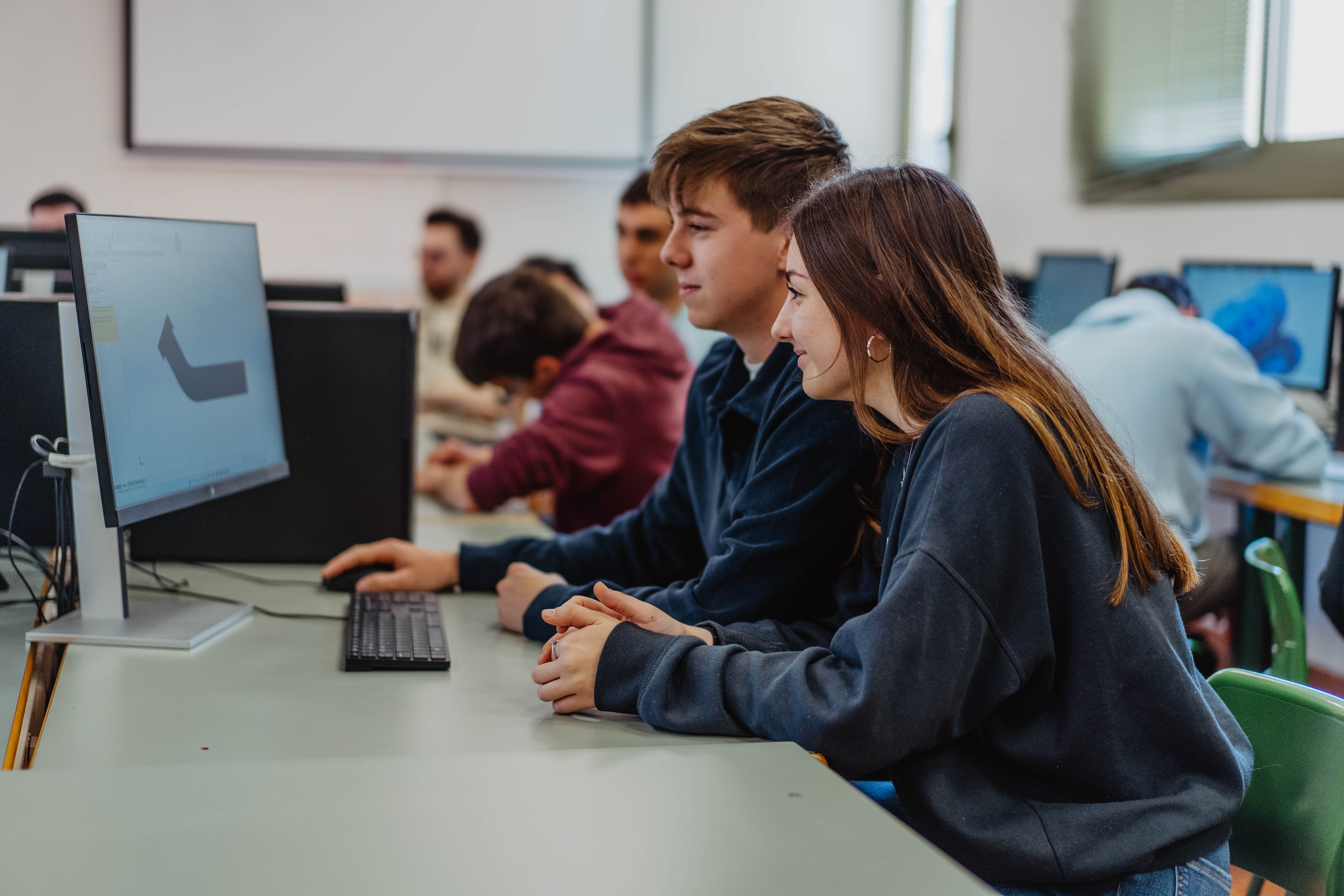
Design and Simulation Laboratory
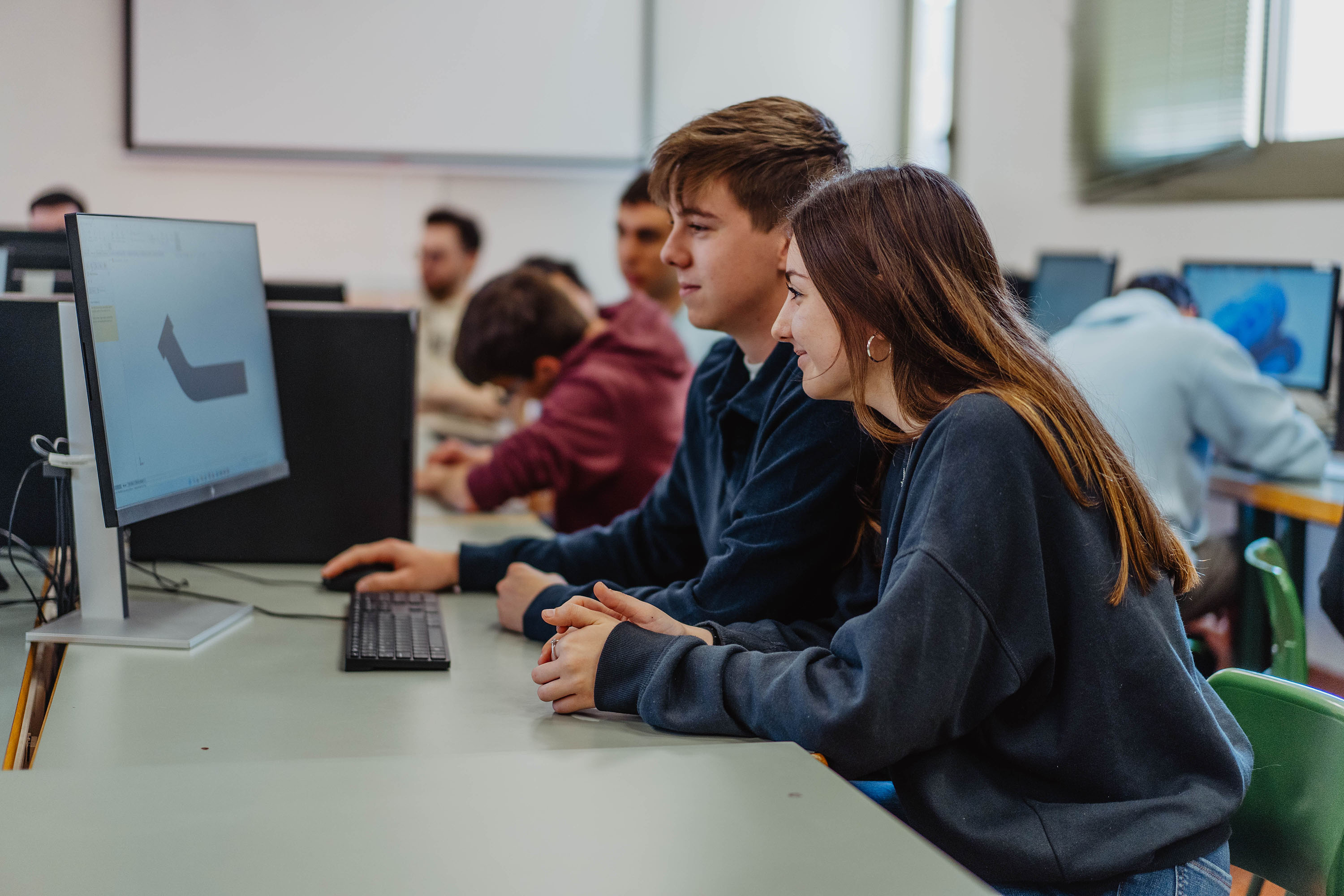
Its main activity is to support all subjects that have computer applications, especially those with a graphic interface.
Therefore, in addition to solving specialised CAD software, there are also specific programmes for electronic, mechanical and fluid-thermal simulation and programming environments.
Subjects:- Aerodynamics of the competition vehicle
- Vehicle aerodynamics
- Design of machines and mechanisms
- Mechanical design and virtual reality
- Dynamics and Vibrations
- Graphic expression
- CAM
- CAE
- CNC
- Expansion of graphic expression
- Company
- Environmental engineering
- Mechanical design
- Transformation centres
- Computer science
- Statistics
- Turn-by-turn simulation and race engineering
- WorkStation computers with extended graphics performance for all types of simulation, with 19" monitors.
- 1 VGA projector on whiteboard, with sound amplification, from teacher's computer.
- Software necessary to meet the needs of the planned subjects, in its latest version.
- Software necessary to meet the office and navigation needs of all users of the school, in its latest version.
- Windows operating system, in its latest version.
- Antivirus system that restores an image of all newly installed, virus-free software each time the computer is started, and that sterilises any virus contamination from user misuse each time the computer is switched off.
Electronics Technology Laboratory
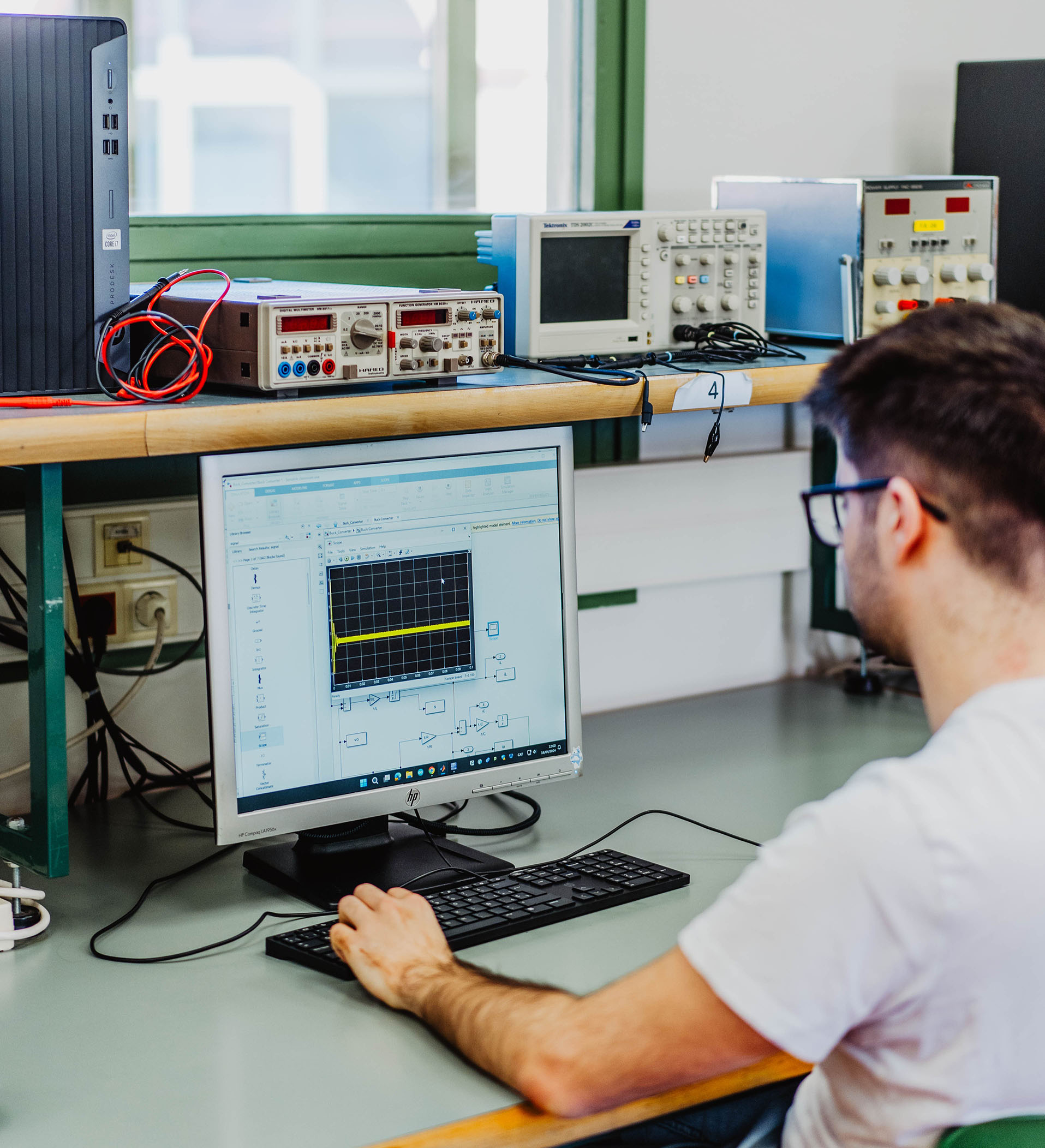
The Electronic Technology Laboratory has 16 fully-equipped two-person workstations where students of electrical engineering and electronics are given practical training in electronics. Programmable digital circuit development programmes and printed circuits, analogue or digital simulations are available, which, together with various general or specific models and laboratory measuring devices, allow for the assimilation of theoretical content supported by practice.
Subjects:
- Electronic Systems
- Electrical and Electronic Technology
- Automatic Regulation
- Automatic Regulation and Industrial Automation Systems
- Industrial Electronics Extension
- Technical Office and Project Management
- Circuit Theory and Electrical Engineering
- Power Electronics
- Electric Motors and Power Electronics
- Environmental Engineering
- Product and Process Statistical Control
- Wind Energy and Biomass
- 1 HP Intel i5-3470 computer with 8GB RAM and 500MB HDD. With Windows 10 O.S.
- 1 SISTELMAT module for DC motor testing developed at the school.
- 1 EDISHIELD module of peripherals for µcontrollers developed at the school.
- 1 Oscilloscope TDS 2002
- 1 HM 8030 function generator
- 1 Multimeter HM 8011
- 1 FAC 662 B power supply unit
- 1 Transformer with symmetrical 6.5V/2.7A and 13V/0.6A outputs.
- 1 Laser Printer RICOH SP 3300 Series PCL 6
- 1 EPSON projector,
- 1 wireless network for IoT communications.
|
Quartus II d’Altera |
Mozilla Firefox |
Orcad 16.0 i 16.5 |
|
Warp Nine |
Cadence |
Labview |
|
DIALux |
Disano |
dmELECT |
| Matlab | Arduino |
ARMStudio |
|
VNC |
Audacity |
EasyEDA |
| KiCad | Eagle |
Thermal and Fluid Mechanics Laboratory

This laboratory is equipped with 16 computers with diversified software that allows for a wide range of simulation and experimentation practices in various subjects. This space is used by students who need to do simulation practices or who have to carry out fluid mechanics practices with a heat pump.
Subjects:
- Fluid Thermal Engineering
- Fundamentals of Thermal Engineering and Fluids
- Machine and Mechanism Design
- Design of Hydraulic and Air Conditioning Installations
- Technical Office and Project Management
- Life Cycle
- Graphic Expression
- Environmental Engineering
- Theory of Structures and Industrial Construction
- Project Management
Equipment:
- Renewable energy model
- Air tunnel test bench
- Calorimeter model
- Heat pump model
- 4 power supplies
- 1 voltage/current source
Software:
- Working Model 2D
- MDsolids
- Dev-Pascal
- Dev-C++
- Matlab
- MD-Cat-MDelec
- OpenOffice
- Internet Explorer
- Cype
- SolidWorks
Chemistry and Environment Laboratory
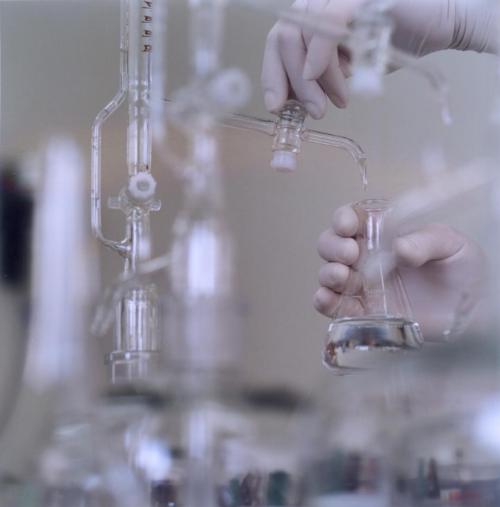
This laboratory is structured in 16 work stations, with two people per group for a better development of their practices.
Subjects:- Chemistry
- Cooker
- Analytical pound
- Extraction fume hood
- Butsen nozzles
- Thermometers
- pH meter
- Volumetric pipettes
- Flasks
- Beakers
- Burettes
- Stands
- Mortars
The laboratory is equipped with the elements of action basically consisting of: emergency shower, eye wash, fire extinguishers, fire blankets and absorbent and also the specific personal protective equipment (PPE) for the practices.
The laboratory has a computer with Internet connection via cable and projector. It also has an enclosed area for the safe and proper storage of chemical products.
Laboratory of Electricity and Electrical Machines
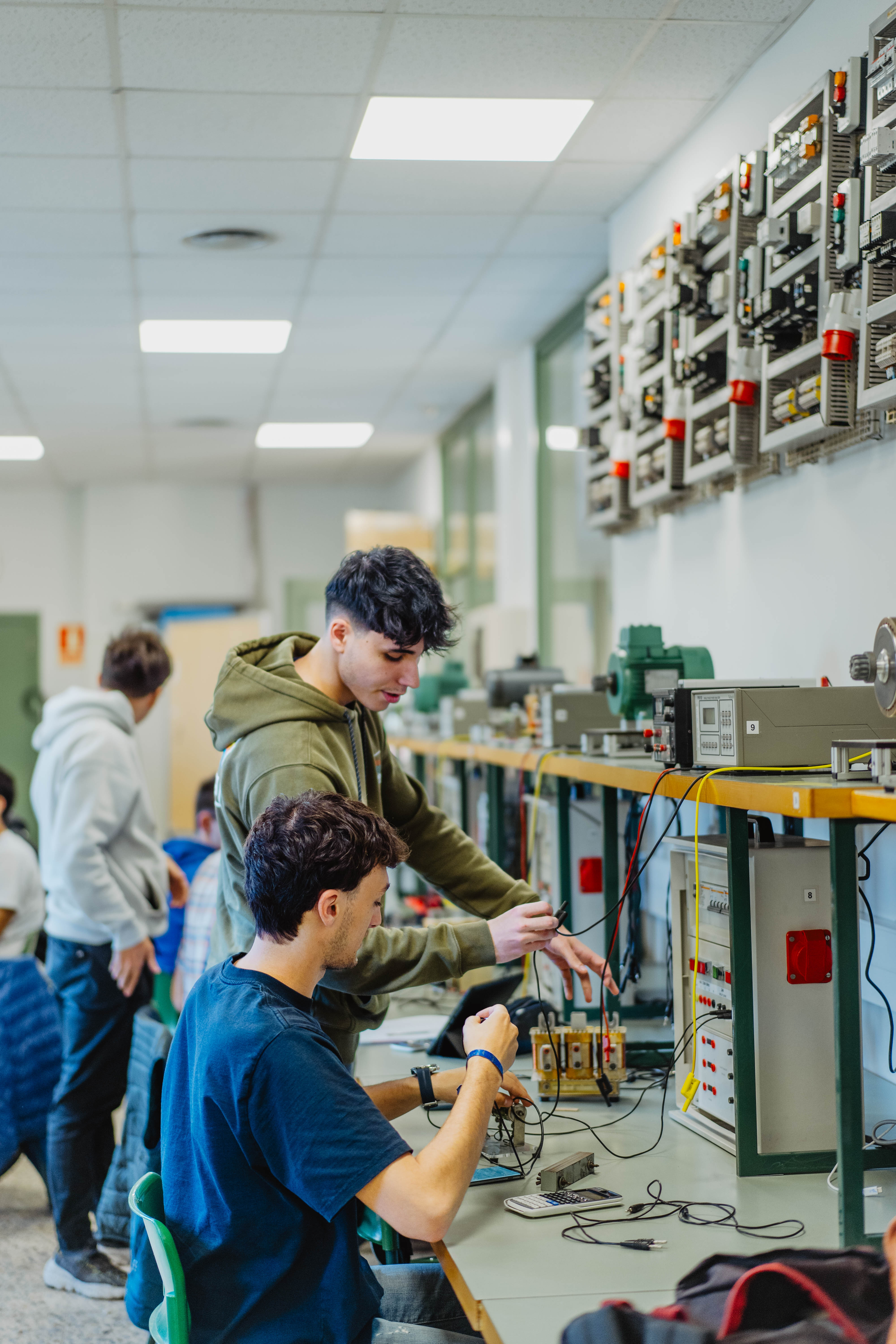 Subjects:
- Electrical generators
- Electrical engineering
- Electrical energy storage
- Microenergies and Harvesting
- Energy Efficiency
- Electrical Machines
- Electrical Technology and Electronics
- Circuit Theory
- Electrical Physics
- 1 three-phase power supply cabinet
- 1 Power supply unit BLAUSONIC FA325
- 1 VOLTECH PM100 mains analyser
- 1 Digital tester: KAISE MY-64
- 1 Set of connection cables with normal banana plugs 1 Set of connection cables with normal banana plugs 1 Set of connection cables with normal banana plugs
- 1 Set of connection cables with safety banana plugs 1 Set of power resistors, power supply, 1 Set of power resistors with safety bananas
- 1 Set of power resistors, inductors and capacitors 1 Set of power resistors, inductors and capacitors
-
PeakTech 6225A Switching Power Supply
- 1 Computer with 17" monitor
- 1 Three-phase mains analyser Multiver 3S
- 1 PROMAX LCR meter MZ 505
- 3 YU FUNG YF-61 current clamp meter
- i3LearnHub 3303W Projector
- 9 Hysteresis load brakes.
- 8 DC machines
- 10 Three-phase AC motors
- 9 Tachymeters with power supply
- 9 Three-phase autotransformers
- 16 Variable power rheostats
- 1 Experimental teaching set with 5 ELWE electric rotary machines
- 2 Baseplates with synchronous generator 2kVA
- 1 Baseplate with synchronous generator of 4kVA
- 3 Synchronous generators regulation and control equipment
- 3 Three-phase resistor equipment
- 1 CVM-k three-phase mains analyser
- 1 Single-phase network analyser CVM-s
- 3 Current transformers
- 1 Set of capacitors 207
- 4 Sets of incandescent, energy-saving, halogen, mercury vapour and high-pressure sodium vapour lamps.
- 1 self-contained emergency luminaire
- 4 digital luxmeters
- 1 set of luminous flux intensity, presence, humidity and twilight detectors
- Indoor, outdoor and emergency lighting calculation software by Daisa, Disano, IEP and Gewiss.
- 2 didactic equipment for neutral regimes.
- 1 Earth telurohmmeter and earth analyser equipment
- 1 Equipment for electrical verifications according to RBT
- 1 Team of three-phase meters for active and reactive energy
- 4 Single-phase meters for active energy
- 5 Current transformers, 8 shunts and 16 transducers
- 1 Automatic reactive energy compensation equipment
- 1 Circutor REC-ICP automatic recloser
- 1 Circutor reclosing differential relay.
- 7 Panels for wired electrical automation installations.
- 3 Electric automatism trainers with detectors.
- Electronic detectors: 26 inductive, 4 capacitive, 28 photoelectric and fibre optic detectors.
- 3 Trainers with pneumatic cylinders.
- 4 Panels with direct current relays.
- 5 Variable speed drives.
- 1 Electronic starter.
- 4 Allen&Bradley Micrologix 1000 PLCs.
- PLC Zelio with analogue inputs from Telemecanique.
Mechanics and Materials Laboratory
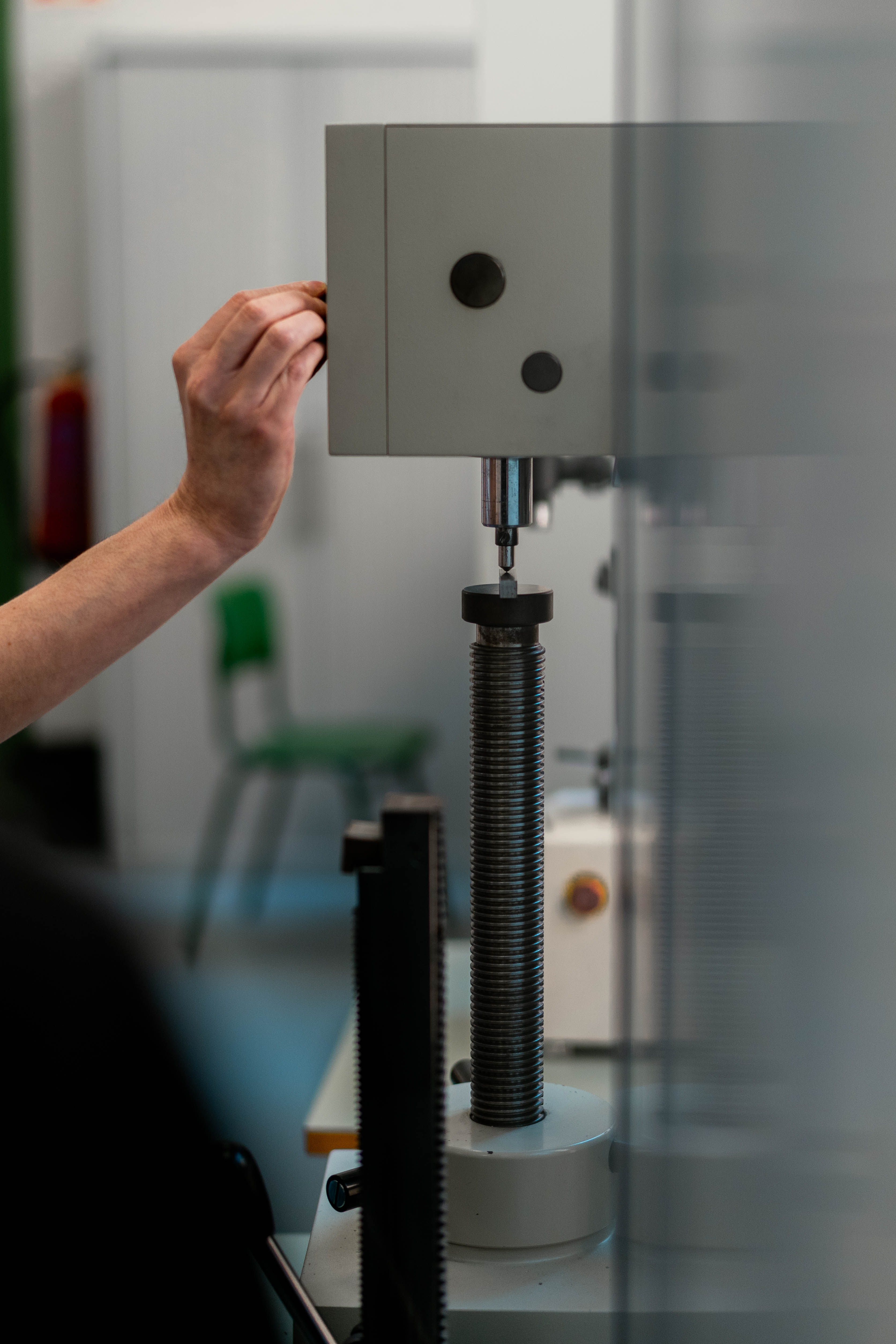
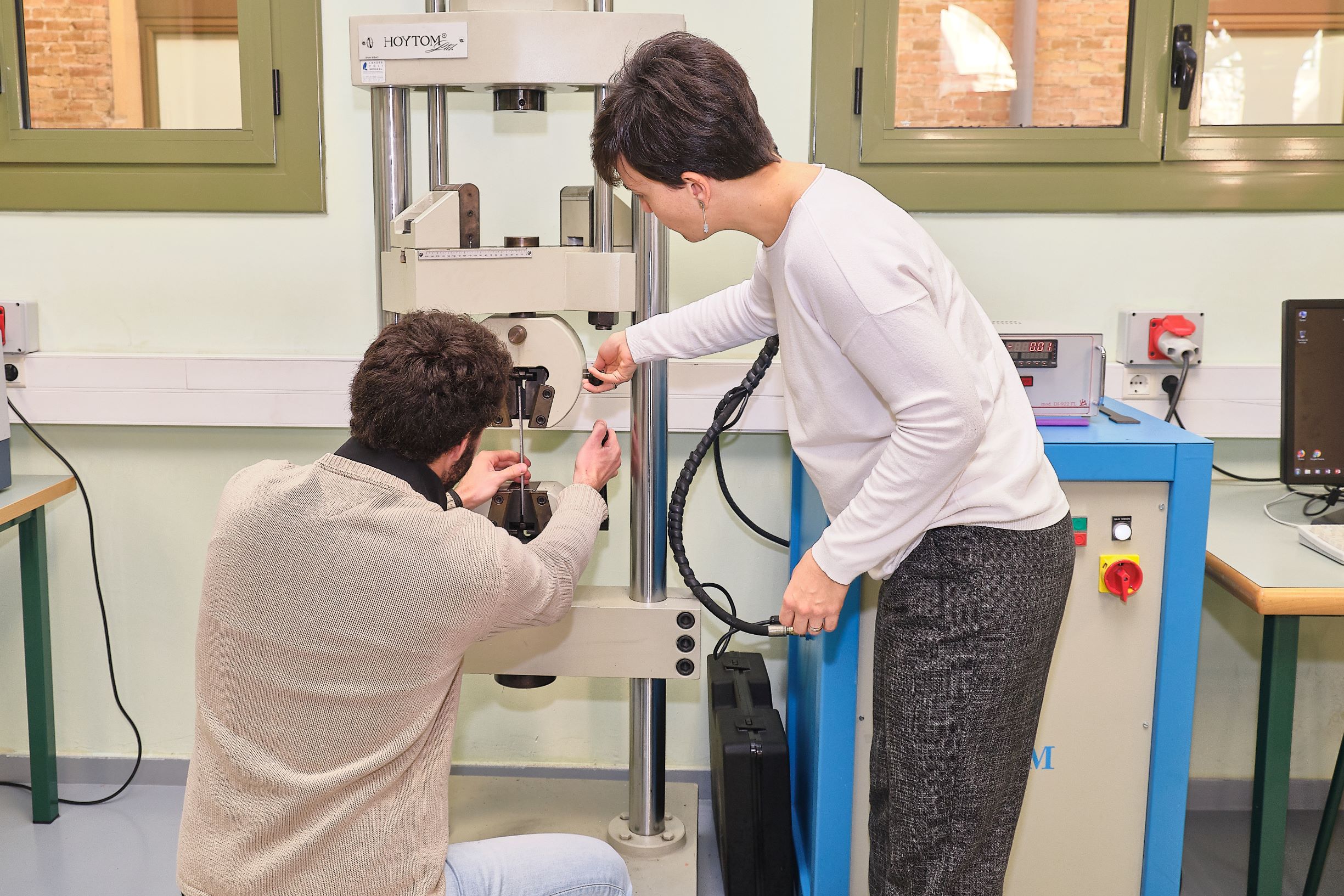
The Mechanics and Materials Laboratory, located in the AT00 area, aims to cover the practical part of subjects related to mechanics and the study of the properties of materials. The mechanics and materials laboratory space consists of 5 areas:
- Mechanical Assays
- Numerical calculation and computer science
- Multi-purpose classroom
- Automotive simulator
- 3D printing area
In addition, the space has a small annexed storage area, used to reserve material for occasional use.
Subjects:- Machine Theory and Mechanisms
- Selection of materials for design
- Elasticity
- Mechanical Engineering Projects
- Automotive Projects
- Resistance of materials
- Materials science and technology
- Manufacturing processes
- Fundamentals of thermal engineering and fluids
- 8 HP Intel I5 computers with 8 GB RAM and 500GB HDD + 19" monitor.
- 3 PC computers for the control of the electronic machinery
- 1 HOYTOM TN-MD 200kN assay machine
- 1 Charpy platform HOYTOM CHARPY 300J/A
- 1 Manual broaching machine
- 1 Universal Hardness tester HOYTOM 713 SR
- 1 Universal hardness tester Innovatest 600 BD
- 1 Polishing machine Buehler Metaserv 2000
- 1 Olympus CK40M inverted-plate metallographic microscope
- 1 Colour camera for microscope JVC TKC 1481 EG
- 1 POLI P800 DIN I granite control board
- 1 Electric furnace for thermal treatments HMP-6
- 1 Shock Dyno Laba7 Feather Light Shock Absorber Assembling Machine
- 5 working tables
- 2 Flexa working machines
- Moulding slides
- Mecano construction material
- Material for the study of fluid properties
- Aluminium and steel testing equipment
- Metrology material
| Data Processor HOYTOM | Olympus microscope image editing software | JmicroVision |
| MD Solids | Laba7 | Working Model 2D CES Edupack 2019 |
| Solidworks 2022 | Autocad 2022 | OpenOffice |
| Altair Hyperworks AcuSolve |
3D Printing Section:
The 3D printing section is part of the mechanics and materials laboratory and contains the following equipment:
- Creality CR10S 3D Printer + Rapsberry Pi 3B+ with webcam
- 3D Printer Creality Ender 3 Pro
- 3D Printer En3D Up! Plus
- 3D Printer En3D Up! Plus 2
- 3D printer En3D Up! Mini
- Stereolithographic printer Elegoo Mars
- Raise3D Pro2Plus 3D Printer
- 3D printing material (PLA, ABS, ASA, Resin, PC, PA, Filaflex)
Also included as part of the mechanics and materials laboratory is the automotive simulation room which includes the following equipment:
- Computer Lenovo Legion T5 26IAB7 Intel Core i7-12700F/16GB/512GB SSD + 1TB HDD/RTX 3060Ti
- Pedals Sim Pedals Pro Clutch Upgrade (Heussinkveld)
- Base CSL Elite Wheel base (Fanatec)
- Fanatec Formula Black steering wheel
- Monitor Samsung Ultrawide 49" gaming curve 144 Hz
- Obutto Revolution Cockpit (full accessories)
- Bodyshakers x4 + SMSL SA-60 amplifier
- SimExperience Software License
- Software: Assetto Corsa, RFactor 2, Automobilista 2
Automotive and Manufacturing Laboratory
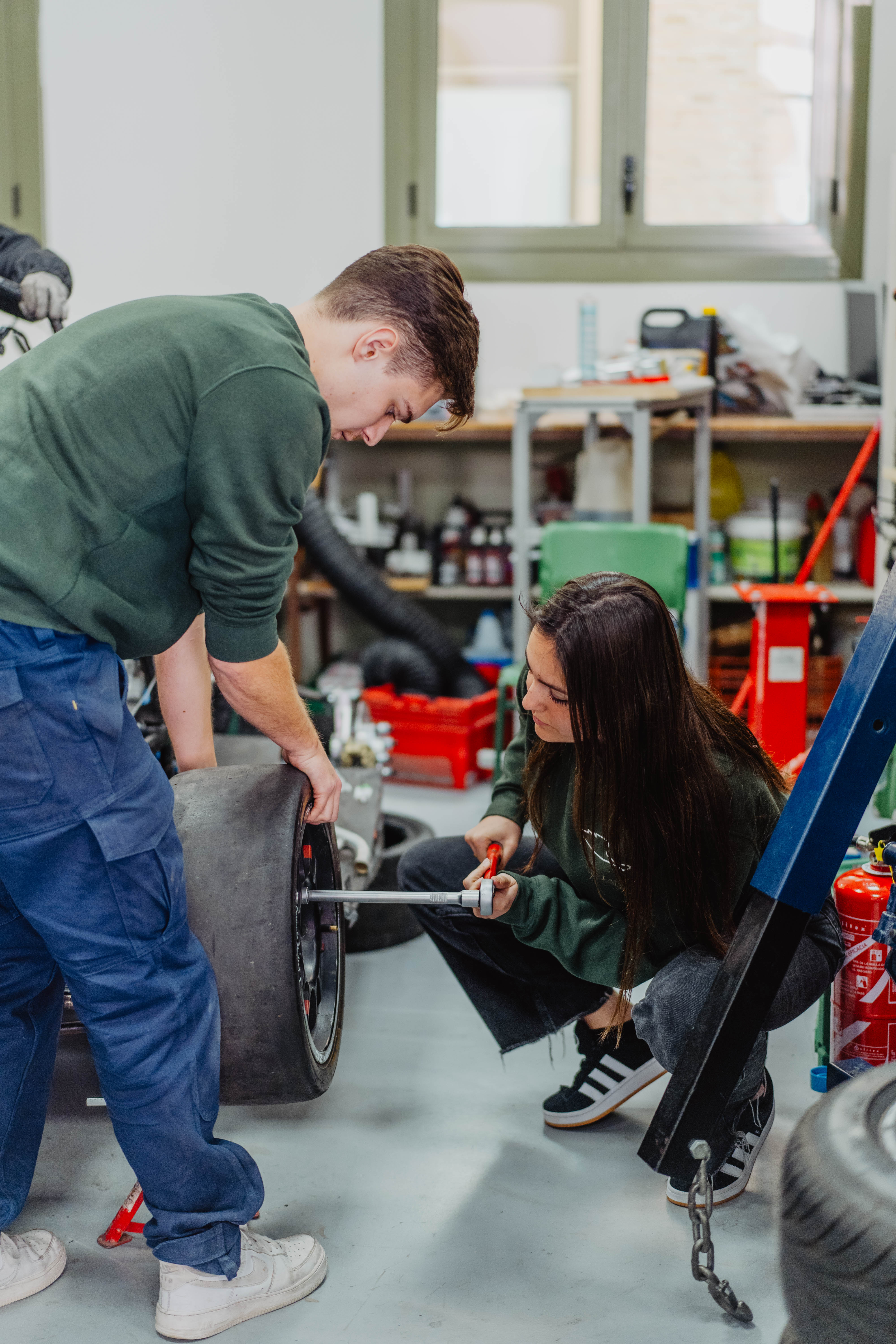
The automotive and manufacturing laboratory offers a working space for both the practical part of various subjects and for student projects, and consists of 4 areas:
- Work area
- Manufacturing
- Space for vehicles
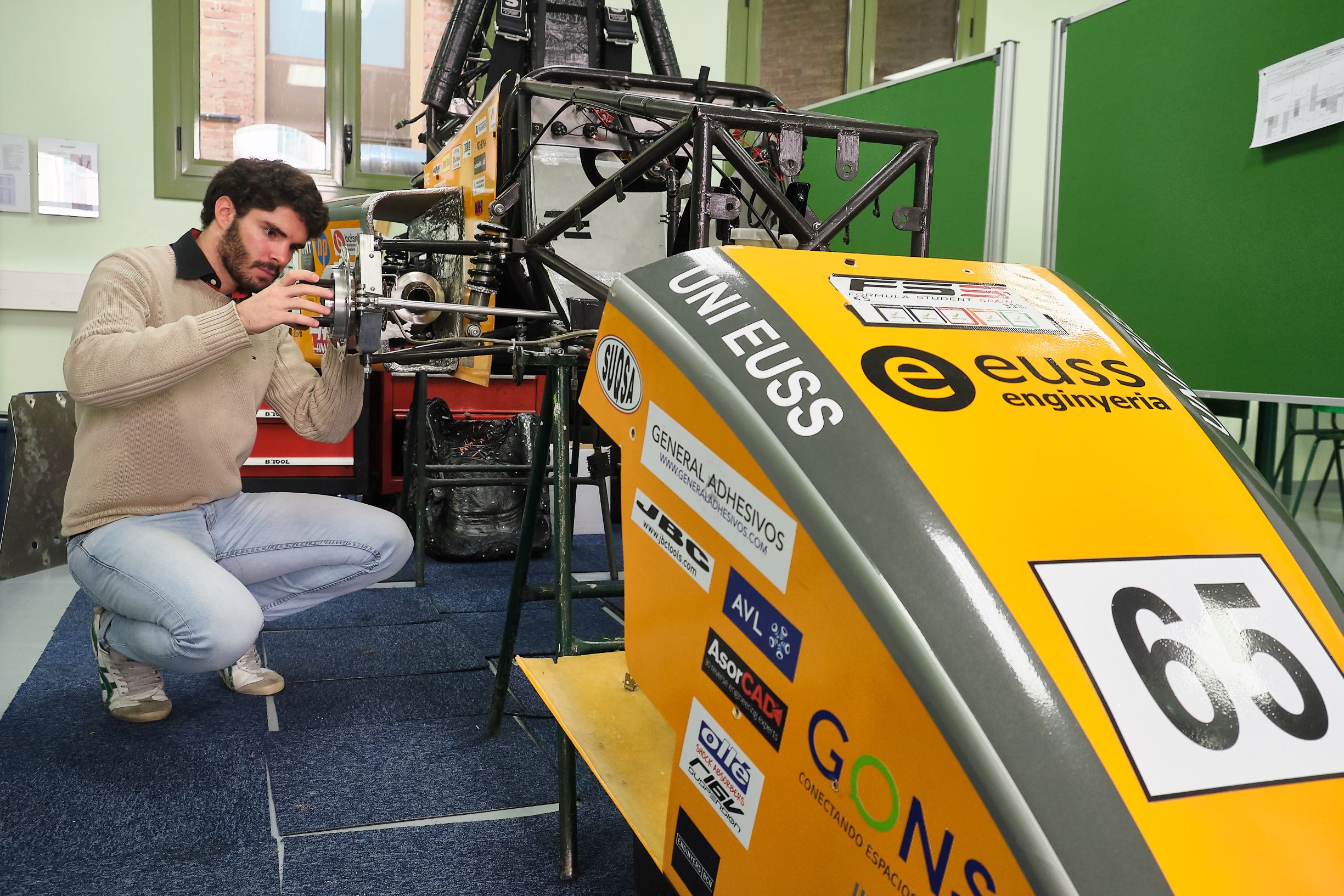
- Area reserved for the Formula Student team
- Mechanical engineering projects
- Automotive projects
- Vehicle mechanical subsystems
- Dynamics and Vibrations
- Vehicle Electronics
- Thermal and hybrid engines
- Thermal engines and machines
- CNC Manufacturing and Simulation
- 2 HP Intel I5 computers with 8 GB RAM and 500GB HDD + 19" Monitor
- 2 Column boring machines
- Heiz High Z S-1000 router type milling machine and accessories
- Numerical control HBM milling machine
- Plasma cutting machine and accessories
- HBM Profi Vario manual shift and accessories
- HBM manual bending machine
- Grinding machine
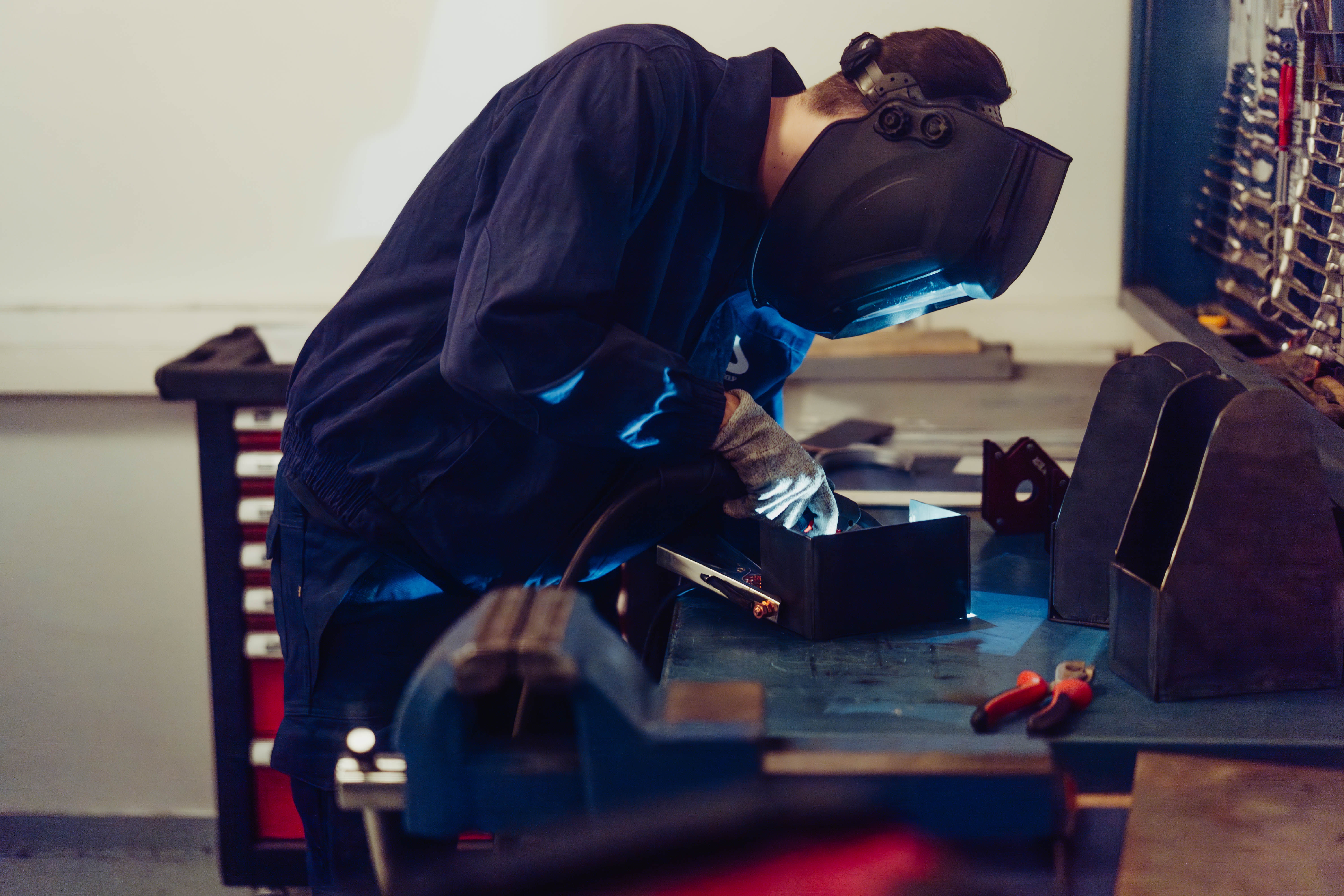
- MIG-MAG welding machine Bester 190C Multi and accessories
- Tesa Microhite 3D measuring machine
- Workbench complete with accessories
- 2 workshop work tables
- Cupboard and tool bench
- Metrology equipment (mechanical and digital):
- Calipers
- Linear and nut micrometers
- Comparators
- Internal verifiers 215
- Set of shims
- Shims
- Gauges
- Roughness meter
- Marble supports
- Trellis
- Brackets
- 1 Toyota Prius hybrid
- 1 Renault Twitzy e-tech all-electric
- 1 Honda Silverwing 600 cc.cc. motorbike
- Fume extractor
- Hoover
| SinuTrain with ShopMill and ShopTurn | MasterCam |
| Arduino | Altair HyperWorks |
| Matlab | SolidWorks |
| MS Office |
Laboratorio de Electrónica del Vehículo
El Laboratorio de Electrónica del vehículo cuenta con 16 puestos de trabajo totalmente equipados, donde se realizan prácticas de electrónica, especialmente para el grado de Ingeniería de Automoción.
El laboratorio dispone de todo lo necesario para conseguir los objetivos de aprendizaje de las asignaturas que se imparten. Esto incluye programas para el desarrollo y simulación de circuitos digitales programables, instrumentación virtual, programación de sistemas basados en microprocesador, y comunicaciones dentro del vehículo. También se desarrollan unidades electrónicas de control (centraletas).
Todo esto se complementa con maquetas generales y específicas, además de los aparatos de medida de laboratorio, que permiten a los estudiantes poner en práctica los conocimientos adquiridos.
Asignaturas:- Electrónica de vehículo
- Subsistemas inteligentes del vehículo
- Sistemas electrónicos
- 1 Ordenador HP Intel i7-13700 con 16GB de memoria RAM y 500MB HDD. Con S.O. Windows 11 Pro
- 1 Módulo Bus CAN
- 1 Módulo Electrónica digital
- 1 Osciloscopio TBS 1000C Tektronix
- 1 Generador de funciones GF-232B PROMAX
- 1 Multímetro MD-2000 PROMAX
- 1 Fuente de alimentación FA-665B PROMAX
- 2 Sensor ESP con bus CAN
- 6 CAN Analyzer de Microchip
| Quartus II d’Altera | Matlab | Arduino |
| VNC | EasyEDA | KiCad |
| Eagle | Vector toolkit (DaVinci) | Microchip Studio |
| R Studio | LibreOffice | Solidworks |
| ProjectLibre | IDLE Python |
Other spaces of the EUSS
In addition to a large number of laboratories, the EUSS also has classrooms and different spaces for teaching such as the meeting room or the serenity space. The first one is a meeting room where the faculty and staff cloisters usually take place and it is also used for exhibitions of final degree works or others. The serenity space is a classroom for the more humanistic subjects of the degree programmes. The space is decorated so that students can draw inspiration from great thinkers.
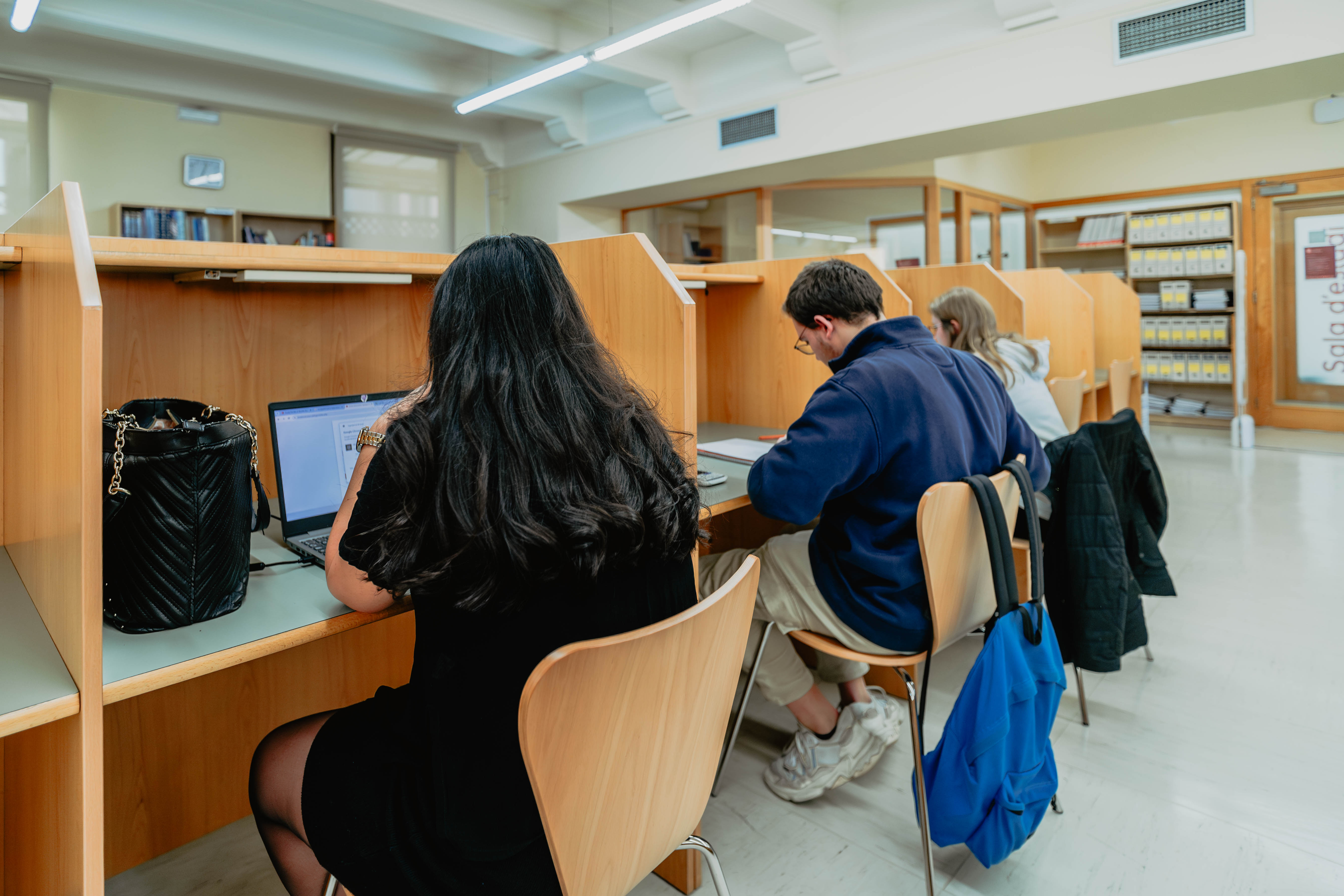
In the EUSS there are also other facilities that make it easier for students to study, work in groups if necessary or enjoy some free time with classmates. These are spaces such as the library, the study room, the CT Ingenieros workspace or the cloister, with a bar, a table football, a ping-pong table and a bicycle and scooter parking.
Les instal·lacions en imatges